Rescue & Safety · Casualty Transfer
Inflatable Stretcher
充气担架
An inflatable stretcher for moving casualties.
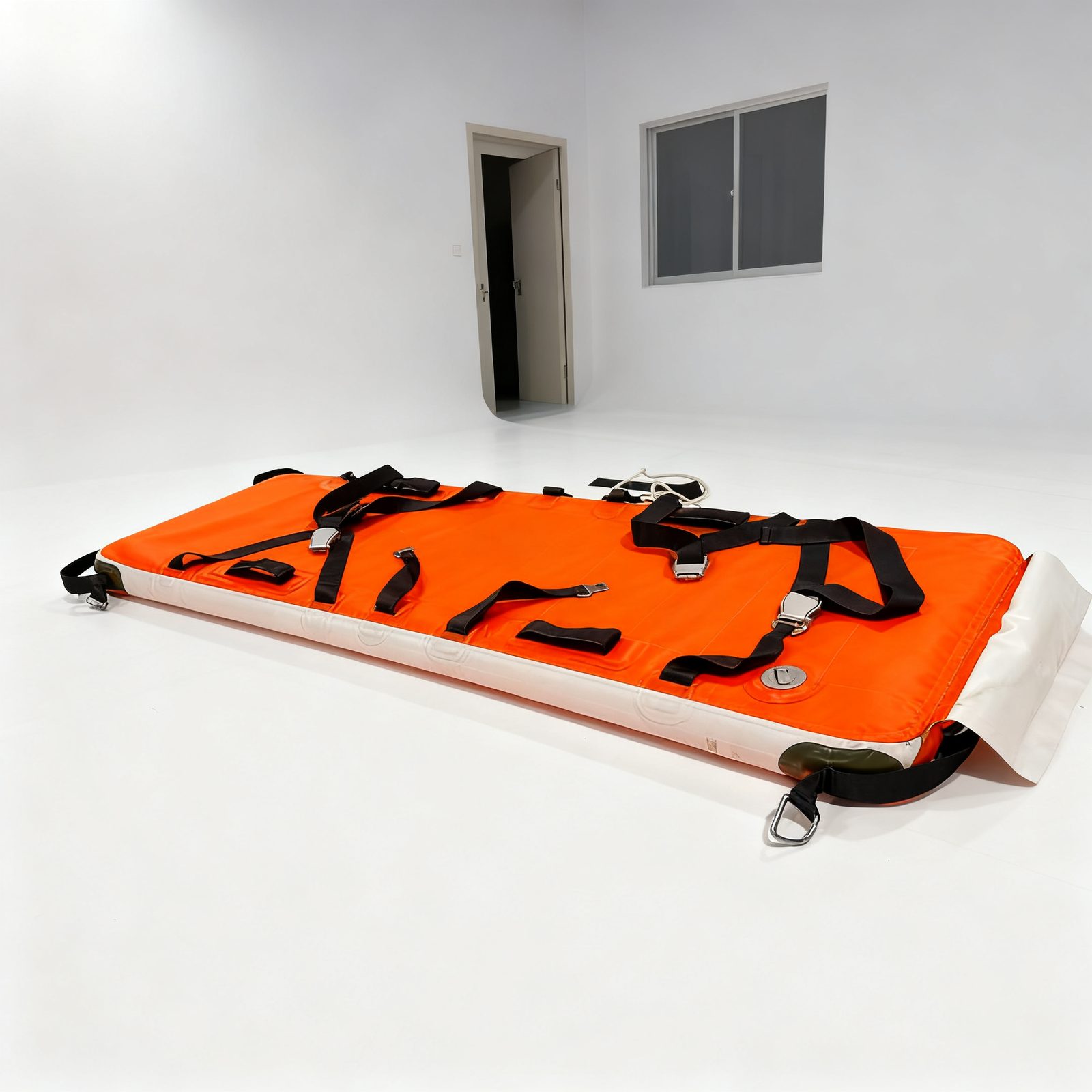
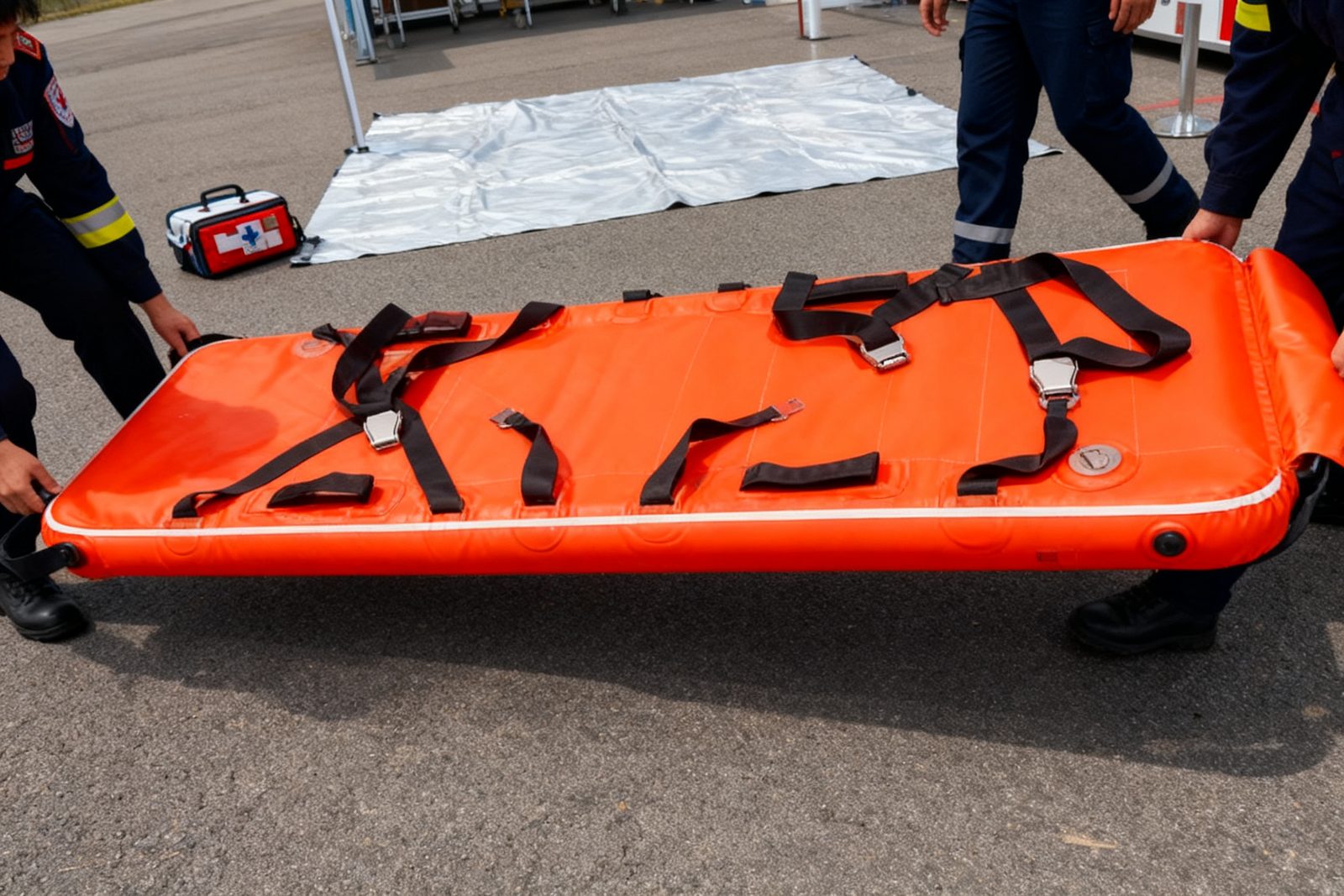
Typical use
- Casualty movement at disaster sites
- Water rescue transfers
- Extraction through confined or mountainous terrain
- Battlefield casualty evacuation
Why an inflatable structure
- Packs small enough to carry on the person
- Rigid enough to support a casualty once inflated
- Buoyant versions float
Where this is not the right choice
It carries; it does not immobilise. Suspected spinal injury requires purpose-made immobilisation equipment used alongside it.
Specifications pending supplier verification
Working pressure, membrane thickness, tensile and tear strength, weight, packed volume, deployed dimensions, fire rating and warranty are being verified with our manufacturing partner and independent laboratories. We publish figures when they are documented, not before.
Rescue cushions, lifting bags and impact protection → Send the details →
Page updated 2026-10-13
Common questions
- Can an inflatable stretcher float?
- Buoyant versions exist specifically for water rescue and carry the casualty clear of the surface. Buoyancy capacity must be verified rather than assumed from the construction.
- Does an inflatable stretcher immobilise the spine?
- No. Spinal immobilisation requires purpose-designed equipment. A stretcher carries; it does not immobilise, and treating one as the other causes harm.