Secours et sécurité · Transport de blessés
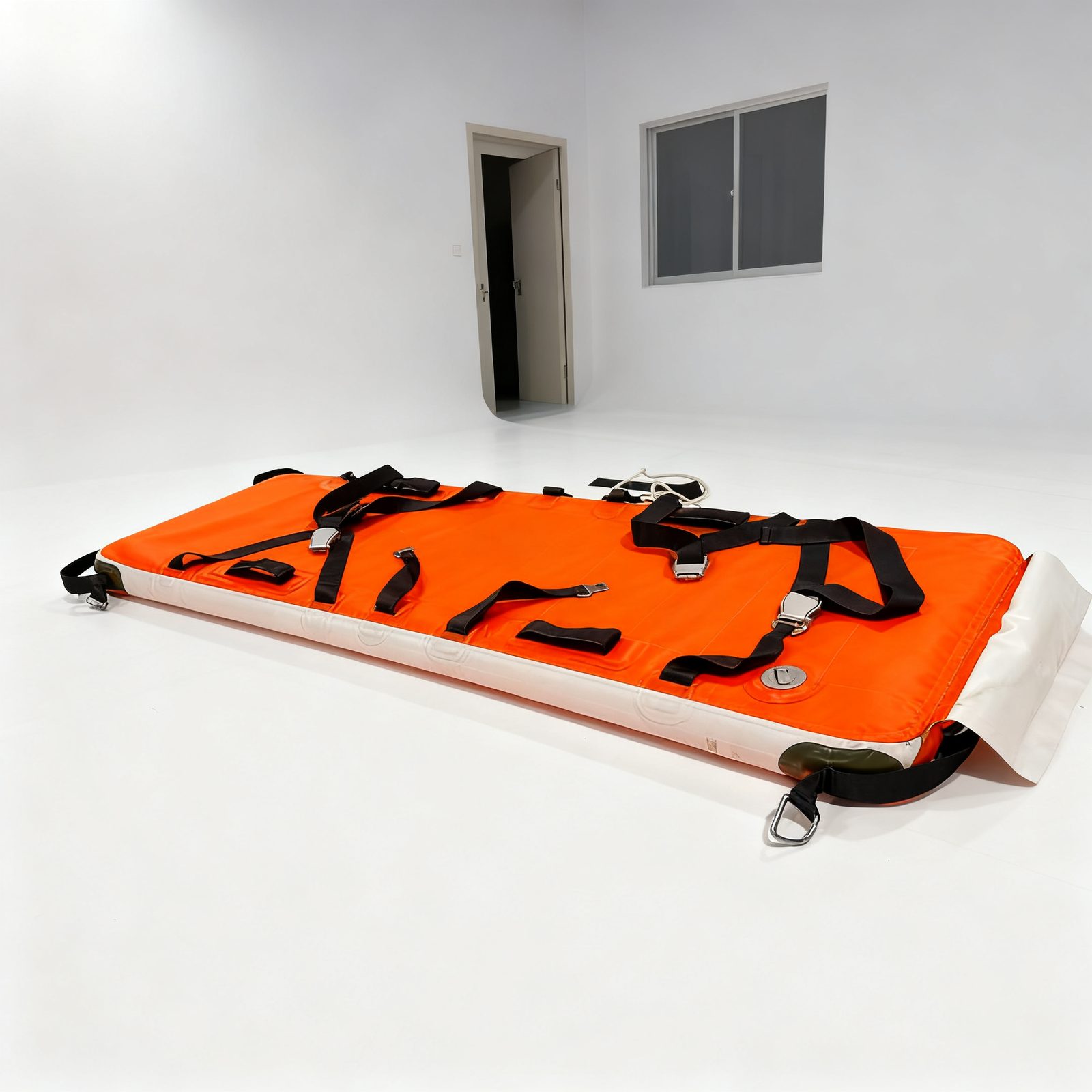
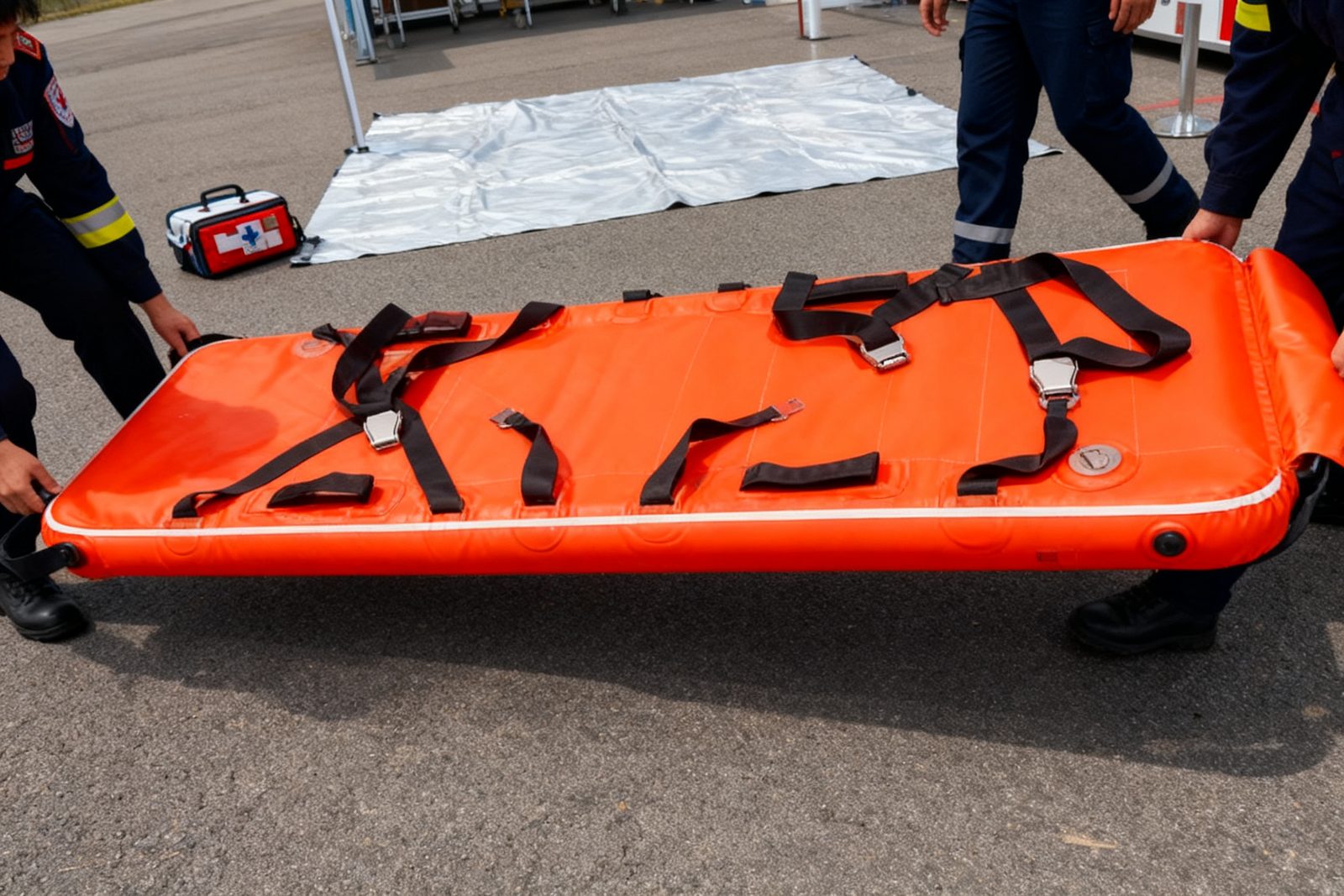
Brancard gonflable
Brancard gonflable
Un brancard gonflable pour déplacer des blessés.
Usages typiques
- Déplacement de blessés sur les sites de catastrophe
- Transports de sauvetage en eaux
- Extraction dans des terrains confinés ou montagneux
- Évacuation de blessés sur le champ de bataille
Pourquoi une structure gonflable
- Se range en petit volume, suffisamment pour être porté sur la personne
- Suffisamment rigide pour supporter un blessé une fois gonflé
- Les versions flottantes sont bouyantes
Quand ce n'est pas le bon choix
Il transporte ; il n'immobilise pas. Une blessure rachidienne suspectée nécessite un équipement d'immobilisation spécialement conçu utilisé conjointement.
Caractéristiques en cours de vérification auprès du fabricant
La pression de fonctionnement, l'épaisseur de la membrane, la résistance à la traction et à la déchirure, le poids, le volume en rangement, les dimensions déployées, le classement au feu et la garantie sont en cours de vérification avec notre partenaire de fabrication et des laboratoires indépendants. Nous publions les chiffres quand ils sont documentés, pas avant.
Rescue cushions, lifting bags and impact protection → Envoyer les détails →
Page mise à jour 2026-10-13
Questions fréquentes
- Un brancard gonflable peut-il flotter ?
- Des versions flottantes existent spécifiquement pour le sauvetage en eaux et portent le blessé hors de la surface. La capacité de flottabilité doit être vérifiée et non pas supposée d'après la construction.
- Un brancard gonflable immobilise-t-il la colonne vertébrale ?
- Non. L'immobilisation rachidienne nécessite un équipement spécialement conçu. Un brancard transporte ; il n'immobilise pas, et traiter l'un comme l'autre cause des dommages.