Buildings & Shelters · Emergency Shelter
Disaster Relief Shelter
灾民安置房
A complete shelter unit deployed on site immediately after a disaster.
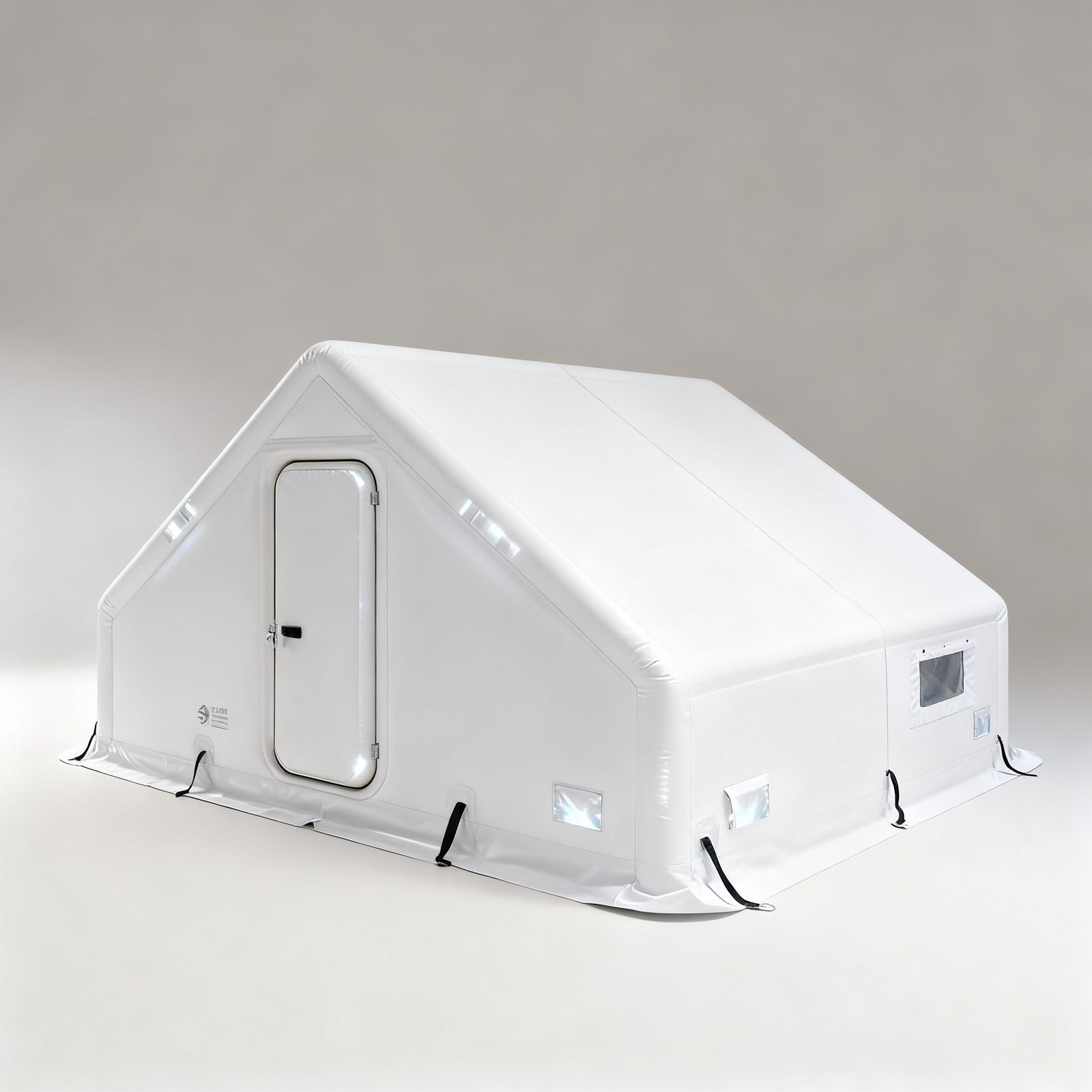
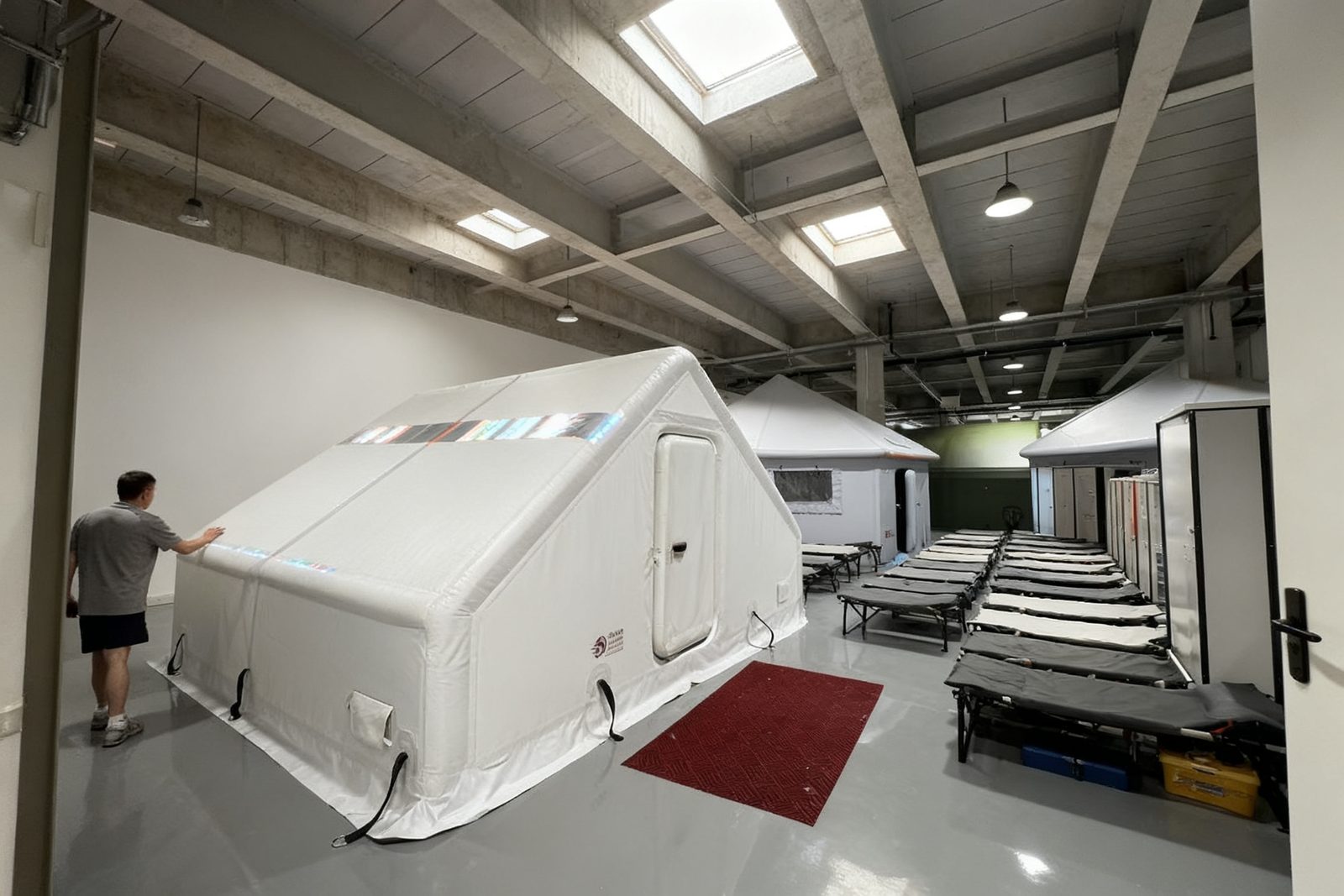
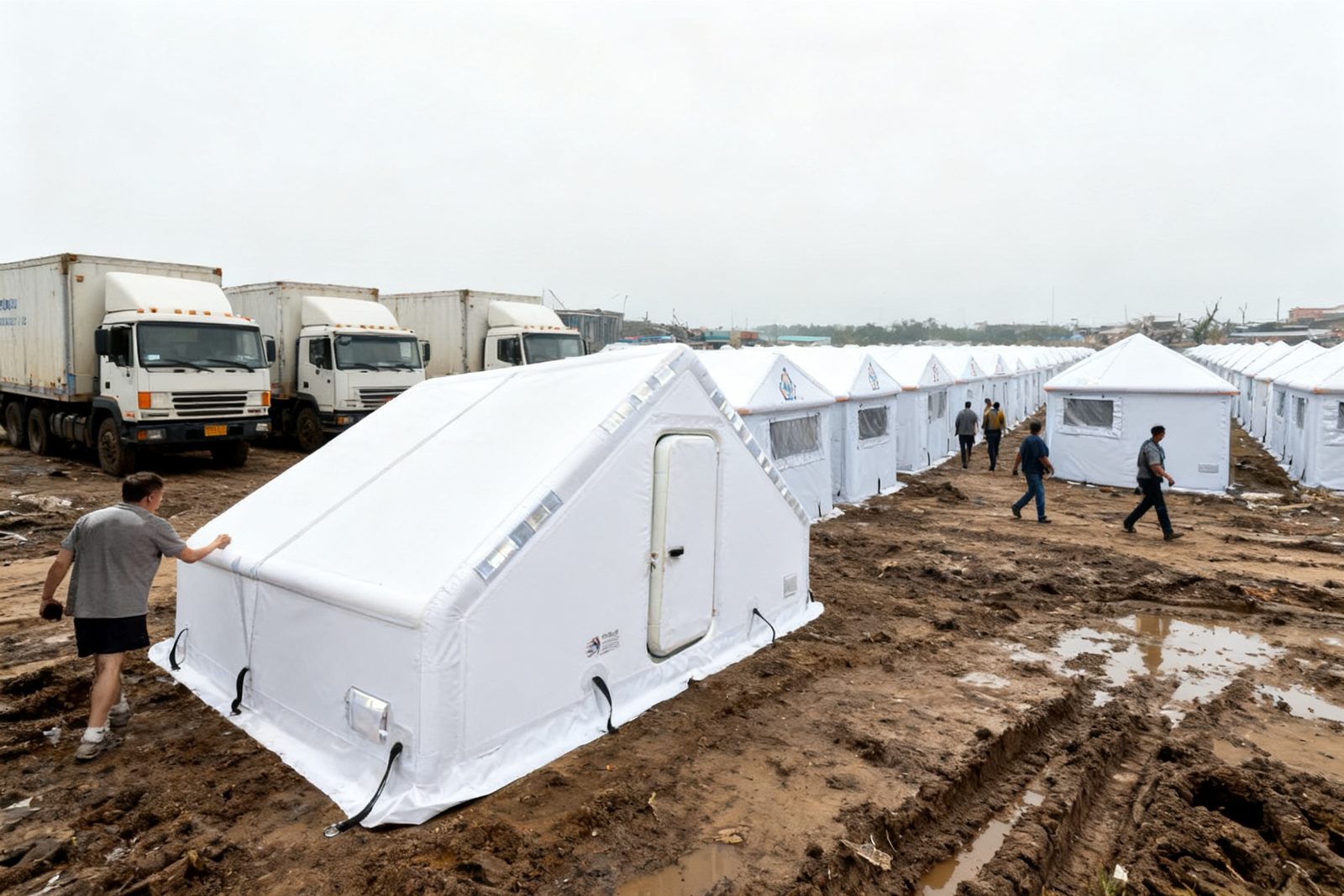
Typical use
- Collective shelter sites after earthquake or flood
- Moving affected families from tents into something that can hold through winter
- Shelter sites laid out in uniform rows
- Sites where roads are damaged and heavy plant cannot reach
Why an inflatable structure
- No crane and no foundation — the crew you have can deploy it
- Packed volume means more units per truckload
- Rows can share a single air source
Where this is not the right choice
Shelter lasting more than about a year. This is a transitional product; long-term shelter should move to prefabricated cabins or permanent reconstruction, and that has to be said plainly in the conversation rather than after the order.
Specifications pending supplier verification
Working pressure, membrane thickness, tensile and tear strength, weight, packed volume, deployed dimensions, fire rating and warranty are being verified with our manufacturing partner and independent laboratories. We publish figures when they are documented, not before.
Rapid deployable space → Send the details →
Page updated 2026-10-12
Common questions
- How fast can an emergency shelter be deployed?
- A small unit is inflated by one or two people in minutes; a camp is limited by air-source capacity and site preparation rather than by the shelters. We publish per-model times once they are measured, not before.
- What is a transitional shelter?
- A transitional shelter is the stage between an emergency tent and permanent housing — enough space, privacy and weather protection to live in for months while reconstruction happens. It is not intended for permanent occupancy.
- Can shelters be reused after a deployment?
- Yes. Units are cleaned, dried, repaired if needed and repacked, which is why humanitarian buyers favour them over consumable tents. Reuse cycles depend on handling discipline more than on the product.