Water & Buoyancy · Access & Load-bearing
Inflatable Floating Bridge
充气浮桥
A modular inflatable crossing carrying people and vehicles over water.
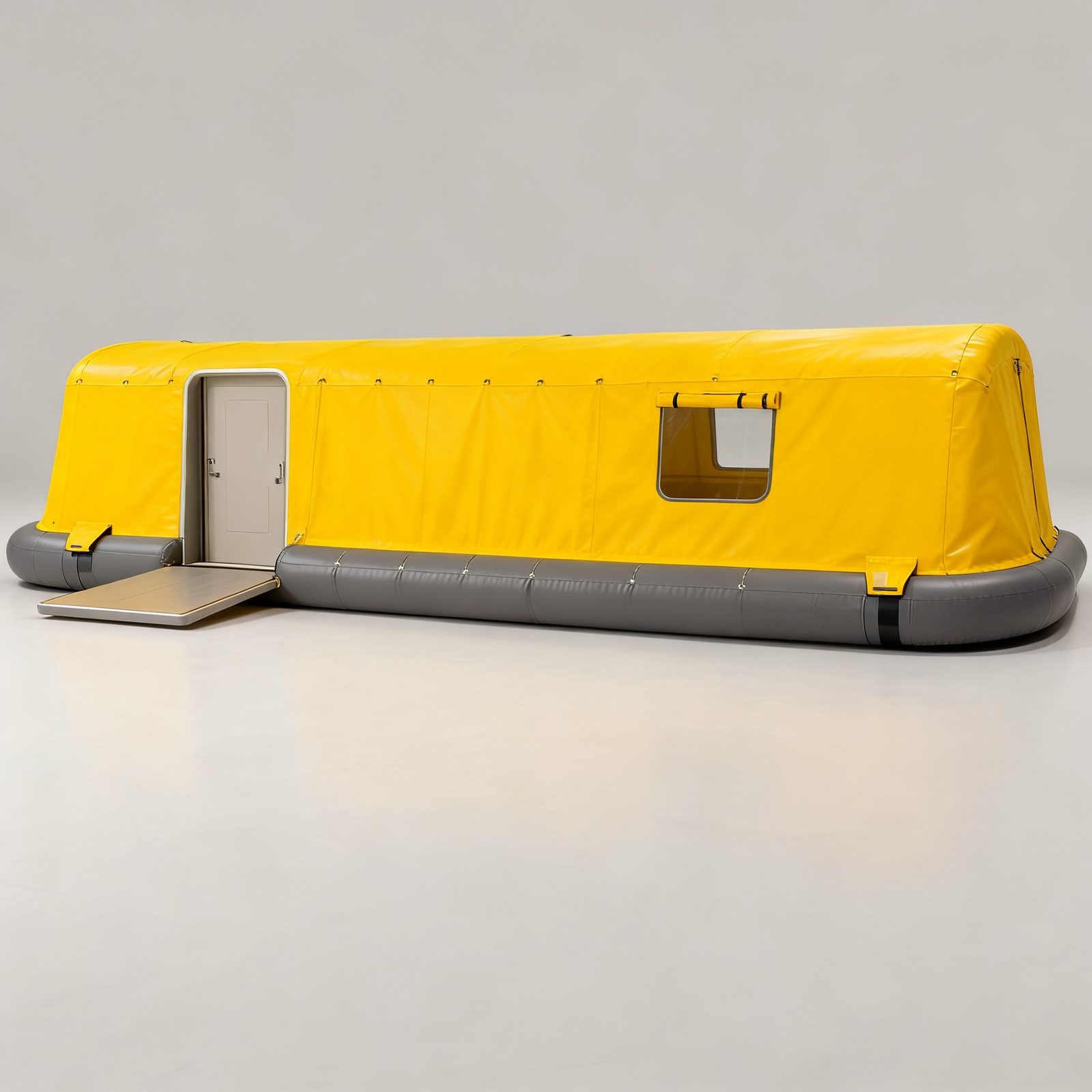
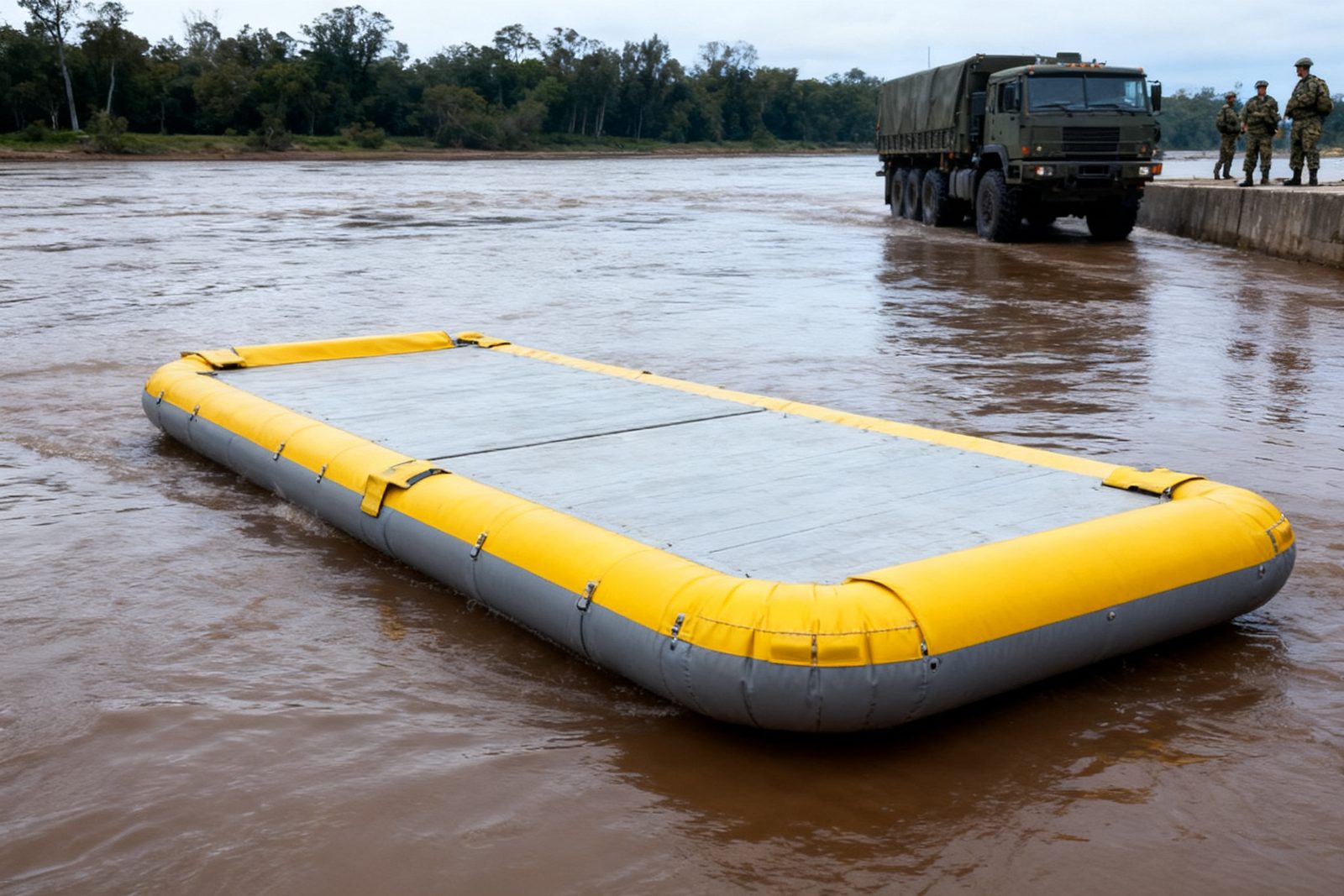
Typical use
- Restoring a crossing after a bridge is lost
- Rivers with no crossing within reach
- Military wet-gap crossing
- Maintaining site access during construction
Why an inflatable structure
- No piling and no abutment works
- Modules add or remove to suit the gap
- Nothing is left in the watercourse afterwards
Where this is not the right choice
Load capacity is the whole question and it must be backed by structural calculation for the specific configuration, current and water level. We do not state a rating we cannot evidence — a bridge that fails under a vehicle kills people.
Specifications pending supplier verification
Working pressure, membrane thickness, tensile and tear strength, weight, packed volume, deployed dimensions, fire rating and warranty are being verified with our manufacturing partner and independent laboratories. We publish figures when they are documented, not before.
Floating bridges and work platforms → Send the details →
Page updated 2026-10-13
Common questions
- How much weight can a floating bridge hold?
- Load capacity is set by buoyancy, deck construction and connection design, and it must be verified per configuration. This is the first question every engineer asks and the one that cannot be answered without structural data.
- How fast can a pontoon bridge be assembled?
- Module count and current speed dominate. The modules themselves inflate quickly; anchoring against flow is the part that takes the time.
- Can vehicles cross an inflatable bridge?
- Rated configurations exist in the market for light and heavy vehicle traffic. Any specific claim needs a load rating behind it, per configuration and per current condition.