Gebäude & Einsatzzelte · Verteidigung
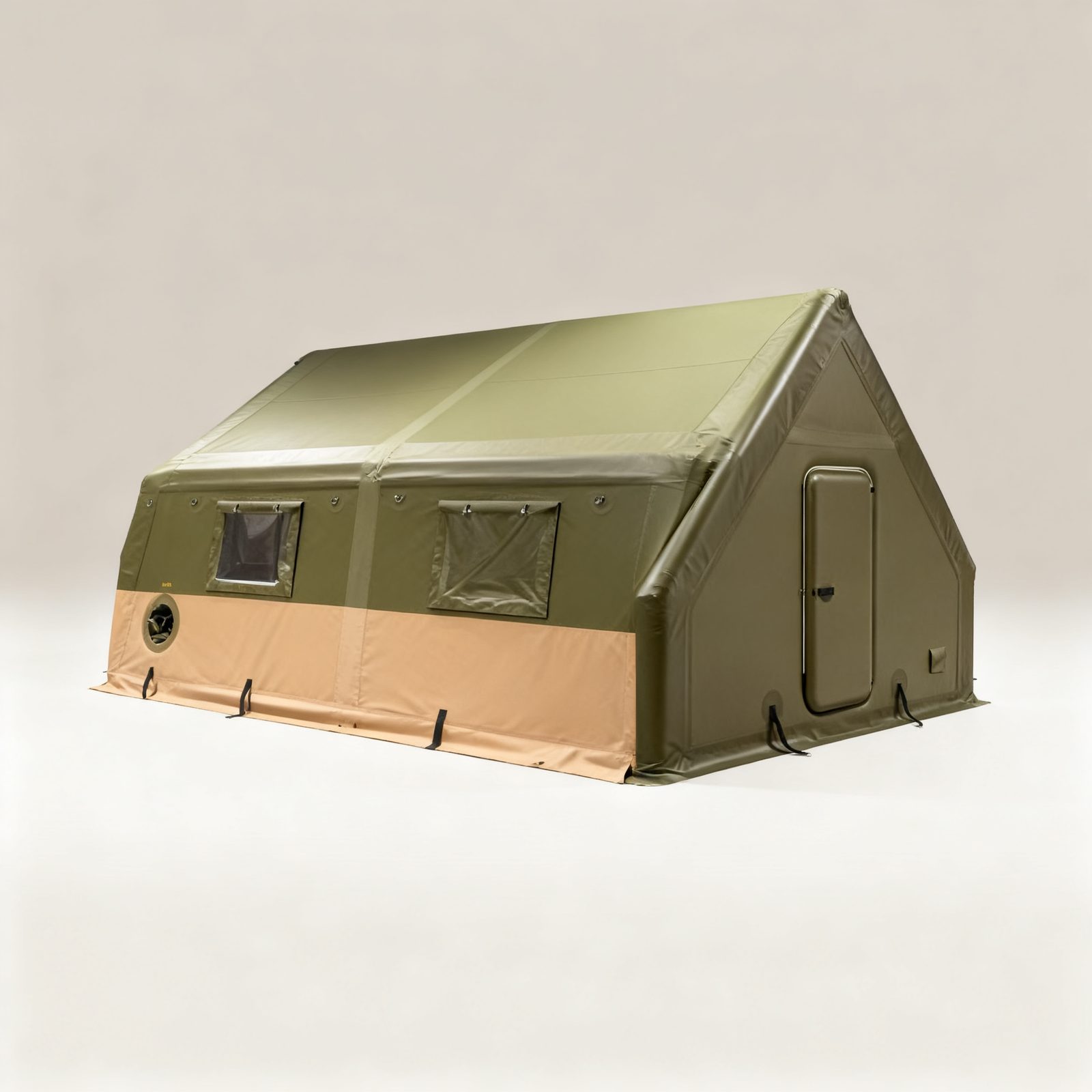
Wartungseinsatzzelt
Wartungszelt
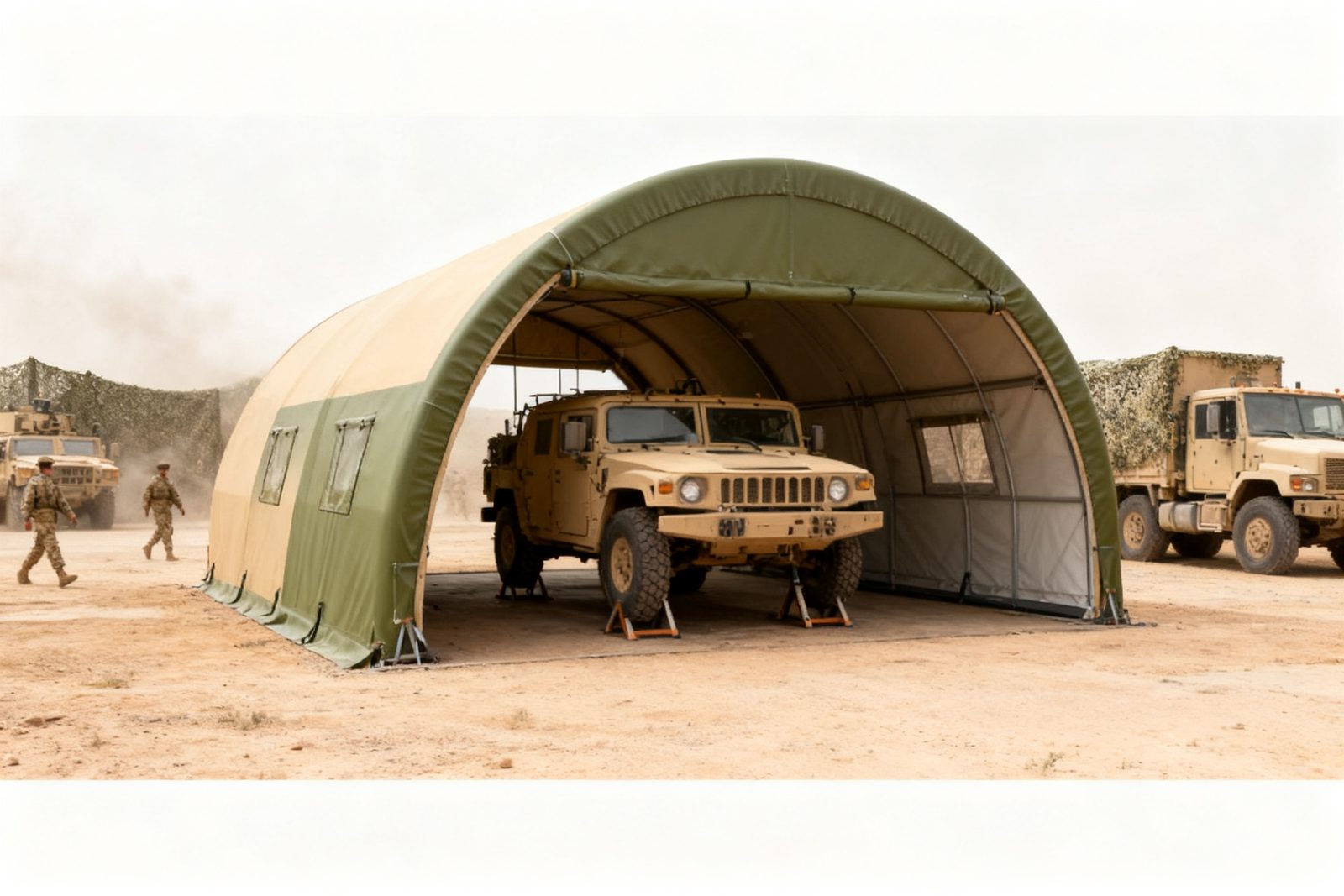
Ein offenes Einsatzzelt zur Arbeit an Fahrzeugen und Ausrüstung im Feld.
Typische Einsätze
- Reparatur von Fahrzeugen und Ausrüstung außerhalb einer Werkstatt
- Übungssupport, der mit der Truppe mitfährt
- Anlagenwartung auf Baustellen
- Rettungsoperationen nach Schäden
Warum eine aufblasbare Konstruktion
- Die Arbeitsfläche bleibt trocken und windgeschützt
- Fährt mit der Einheit, die es unterstützt, voran
- Beide Enden offen, damit ein Fahrzeug hindurchfährt
Wann dies nicht die richtige Wahl ist
Am Bauwerk darf nichts aufgehängt oder abgejackt werden. Zum Heben ist ein unabhängiger Rahmen erforderlich, der seine Last direkt auf den Boden überträgt – dies ist eine Sicherheitsvorschrift, keine Präferenz.
Technische Daten werden beim Hersteller verifiziert
Arbeitsdruck, Membrandicke, Zug- und Reißfestigkeit, Gewicht, Packvolumen, entfaltete Abmessungen, Brandschutzklassifizierung und Garantie werden derzeit mit unserem Herstellungspartner und unabhängigen Laboratorien verifiziert. Wir veröffentlichen Zahlen, sobald sie dokumentiert sind, nicht vorher.
Access-constrained deployment → Details senden →
Seite aktualisiert 2026-10-13
Häufige Fragen
- Was ist ein Drop-Stitch-Zelt?
- Ein Drop-Stitch-Zelt hat Wände, die selbst zu starren Paneelen aufgeblasen werden, anstatt einer Haut, die über aufgeblasene Schläuche gestreckt wird. Zehntausende von internen Fäden halten die beiden Gewebeflächen parallel, was der Wand echte Dicke und Steifigkeit verleiht.
- Welche Windstärke kann ein Militärzelt aufblasbar standhalten?
- Die Windbeständigkeit hängt von Arbeitsdruck, Verankerung und dem spezifischen Modell ab und ist ohne einen dahinterliegenden Testbericht bedeutungslos. Unsere werden derzeit verifiziert; wir veröffentlichen Zahlen, sobald sie dokumentiert sind.
- Was passiert, wenn ein militärisches aufblasbares Zelt durchstochen wird?
- In einer kammerten Drop-Stitch-Struktur weicht die betroffene Kammer ab, und der Rest der Struktur bleibt stehen. Der Loch wird im Feld repariert. Bei der Luftstrahlkonstruktion ist das Rohr der Rahmen, sodass der Verlust eines Rohres ein strukturelles Ereignis darstellt.