FAQ · ECHTE FRAGEN, EHRLICHE ANTWORTEN
Fragen, die Käufer tatsächlich stellen
Jede unten stehende Frage wurde aus echten Suchergebnissen entnommen, nicht für die Seite erfunden. Wo wir noch keine verifizierten Daten haben, steht dies in der Antwort.
Diese Seite beantwortet fünfzig Fragen zu aufblasbaren Membranstrukturen, entnommen aus echten Suchanfragen: Konstruktionsunterschiede zwischen Drop-Stitch-, Air-Beam- und Tragluft-Designs; Einsatzzeiten; Gewebespezifikationen; Zertifizierungsanforderungen und kommerzielle Bedingungen. Wo gemessene Leistungsdaten noch mit unserem Herstellungspartner verifiziert werden, wird dies in der Antwort deutlich angegeben, anstatt eine Schätzung zu substituieren.
Konstruktion – was Sie tatsächlich kaufen
- Was ist Drop-Stitch-Gewebe?
- Zwei Schichten beschichtetes Basengewebe, verbunden durch Tausende von internen Fäden gleicher Länge. Bei Aufblasen spannen sich die Fäden straff und halten die beiden Flächen parallel, so dass die Wand zu einem starren Panel mit echter Dicke wird, statt zu einem gerundeten Rohr.
- Wie wird Drop-Stitch-Gewebe hergestellt?
- Die beiden Flächen und die verbindenden Fäden werden auf spezialisierten Maschinen miteinander gewebt oder gestrickt und dann mit PVC oder TPU beschichtet. Die interne Fadenstruktur entsteht während des Webens und kann nicht nachträglich zu gewöhnlichem Gewebe hinzugefügt werden.
- Welche Dicke von Drop-Stitch-Gewebe ist erhältlich?
- Die kommerziell erhältliche Kammer Tiefe reicht in der Industrie ungefähr von 5 cm bis 30 cm, was Paddleboards, Bootendecks, Gymnastikmatten und die meisten Schutzwände umfasst. Wenn ein Lieferant eine Tiefe weit außerhalb dieses Bereichs anbietet, fragen Sie, wie es konstruiert ist, bevor Sie es in Ihr Design einbinden.
- Was ist ein Drop-Stitch-Zelt?
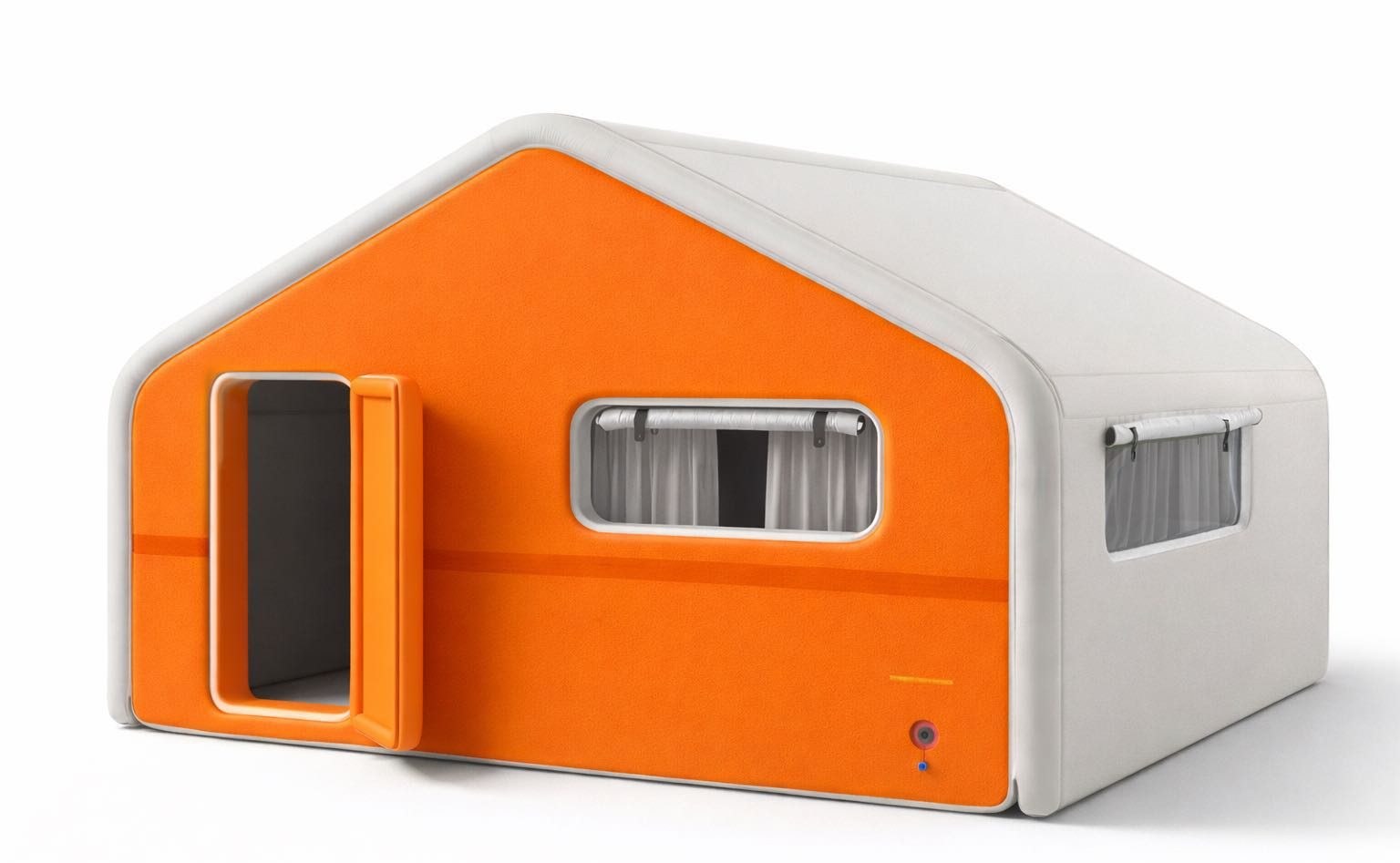
- Ein Schutzraum, dessen Wände aus aufgeblasenen Drop-Stitch-Panels bestehen, anstatt aus einem Gewebeschlauch, der über aufgeblasene Rohre gestreckt wird. Die Wand selbst trägt die Struktur.
- Ist Drop-Stitch stärker als Air-Beam?
- Nicht als einzelne Zahl. Die Wand ist steifer bei ihrer Dicke und die Struktur ist in Kammern unterteilt, so dass ein Loch ein Panel weich macht, anstatt das Gebäude zu kollabieren. Ob diese Redundanz den extra Kosten wert ist, hängt von der Verwendung der Struktur ab.
- Wie stark ist ein Militärzelt aufblasbar?
- Das hängt vollständig von der Konstruktion, der Gewebespezifikation und dem Arbeitsdruck ab. Wir veröffentlichen keine Festigkeitsangaben, bis wir über unabhängige Testberichte verfügen – siehe die Mitteilung oben auf dieser Seite.
- Welchen Wind kann ein aufblasbares Zelt standhalten?
- Die Windbeständigkeit hängt von der Verankerung, den Bodenverhältnissen, der Strukturgeometrie und dem Arbeitsdruck ab. Jeder Lieferant, der eine einzelne Windzahl angibt, ohne diese Bedingungen anzugeben, zitiert eine Marketingzahl.
- Kann man Drop-Stitch und Air-Beam anhand eines Fotos unterscheiden?
- Normalerweise ja. Air-Beam zeigt deutliche Rohrbögen und eine gesteppte oder gerippte Oberfläche. Drop-Stitch zeigt flache Wandflächen, die an scharfen geschweißten Kanten treffen.
- Braucht eine Traglufthalle ständigen Strom?
- Ja. Traglufthallen werden durch internen Druck von Gebläsen gehalten, die kontinuierlich laufen, mit Notstrom für Gebläse- oder Netzausfälle. Air-Wall-Strukturen betreiben Gebläse nur während des Aufbaus.
- Was passiert mit einer Traglufthalle bei einem Stromausfall?
- Sie bleibt stehen, solange der Restdruck andauert, dann entlädt sie sich. Betreiber dimensionieren Notstrom, um dies abzudecken, so dass das Risiko verwaltet, nicht aber beseitigt wird.
Einsatz und Nutzung
- Wie lange dauert der Aufbau eines Einsatzzelts?
- Kleine Einheiten dauern Minuten; Einheiten mit großer Spannweite dauern länger und hängen von der Gebläsekapazität und der Verankerung ab. Konkurrenten veröffentlichen 10 bis 20 Minuten für mittelgroße Militärzelte. Wir werden unsere eigenen Zeiten veröffentlichen, sobald sie gemessen wurden, nicht vorher.
- Wie lange dauert der Aufbau eines Feldlazarettzeltes?
- Für ein einzelnes Modul dauert das Aufblasen Minuten plus Verankerungszeit. Ein mehrmoduläres Krankenhaus mit Verbindungsgängen ist für ein ausgebildetes Team eine halbtägige Aufgabe.
- Wie schnell kann ein Notfallschutzraum eingesetzt werden?
- Das Aufblasen ist der schnelle Teil. In der Praxis sind die begrenzenden Faktoren das Transportieren der Einheiten zum Einsatzort, die Bodenvorbereitung und die Verankerung – deshalb ist das Packvolumen genauso wichtig wie die Aufblaszeit.
- Wie schnell wird ein Führungsstelle-Zelt aufgebaut?
- Die Struktur selbst ist schnell. Das Umwandeln in eine funktionierende Führungsstelle – Strom, Kabel, Möbel, Bildschirme – ist der Teil, der die eigentliche Zeit bestimmt.
- Können Einsatzzelte im Feld repariert werden?
- Ja. Löcher werden mit einem Reparaturkit gepatcht. Bei kammerförmiger Konstruktion handelt es sich um eine Wartungsaufgabe und nicht um einen strukturellen Ausfall.
- Wie lange halten aufblasbare Zelte?
- Gewebestrukturen haben eine kürzere Lebensdauer als Metallrahmen. Veröffentlichte Zahlen in der Branche reichen von fünf bis zehn Jahren bei properer Pflege, aber wir geben keine Angabe für unsere eigenen Produkte ohne UV-Alterungsdaten.
- Brauchen Einsatzzelte Strom, um stehen zu bleiben?
- Drop-Stitch- und Air-Beam-Strukturen nicht – Gebläse laufen nur während des Aufbaus. Traglufthallen schon.
- Welcher Schutzraum funktioniert bei minus 40?
- Die Kaltleistung hängt von der Beschichtung ab. TPU bleibt bei Kälte flexibel, wo PVC steif wird. Wir akzeptieren keine Polarprojekte ohne Kältetestdaten, und wir würden Ihnen dasselbe über jeden Lieferanten sagen, der dies tut.
- Wie baut man ein Camp ohne Straßenzugang?
- Packvolumen und Aufbaucrew sind die beiden Einschränkungen. Aufblasbare Einheiten packen klein und brauchen keine Hebeausrüstung – das ist der Grund, warum sie pro Quadratmeter teurer sind als ein Rahmen.
Auswahl – welches Produkt, welche Konstruktion
- Was ist besser für ein Feldlazarett, aufblasbar oder Rahmen?
- In den meisten Fällen aufblasbar, weil der entscheidende Faktor darin besteht, wie schnell der Raum nutzbar wird und wie viel davon auf dem verfügbaren Transport passt. Für ein Krankenhaus, das jahrelang an einem Ort steht, ist ein Rahmen oder herkömmliche Konstruktion billiger.
- Welche Konstruktion verwenden die meisten Militärzelt aufblasbar?
- Air-Beam, nach Volumen. Drop-Stitch ist die neuere Konstruktion, die dort eingesetzt wird, wo strukturelle Redundanz die Kosten rechtfertigt.
- Ist eine Air-Wall-Struktur teurer als eine Traglufthalle?
- Pro Quadratmeter bei großen Spannweiten ja, und die Differenz wächst mit der Spannweite. Der Vergleich ändert sich, sobald die kontinuierliche Gebläseleistung, Notstromversorgung und Luftschleusen in den Preis der Traglufthalle einbezogen werden.
- Kann eine Luftwandstruktur die gleichen Distanzen wie eine Traglufthalle überbrücken?
- Die Spannweitenkapazität hängt von verifizierten strukturellen Daten ab, die wir noch nicht haben. Wir geben keine Spannweiten in Schätzungen an.
- Wie groß kann ein aufblasbarer Hangar sein?
- Die Kapazität für große Spannweiten ist genau die Zahl, die Arbeitsdruckdaten und eine strukturelle Berechnung erfordert. Bis wir beide haben, weigern wir uns, ein Maximum anzugeben.
- Was ist eine Führungsstelle?
- Ein deployierbarer Arbeitsraum für Befehl und Koordination – Tische, Strom, Kabel und Bildschirme in einer Struktur, die auf einem unvorbereiteten Gelände errichtet und nach Beendigung des Einsatzes wieder abgebaut werden kann.
- Was ist ein Triage-Zelt?
- Der Raum, in dem Verletzte vor der Behandlung nach Schweregrad sortiert werden. Er befindet sich am Eingang einer medizinischen Einsatzstätte, und seine Durchsatzleistung bestimmt die der gesamten Einrichtung.
- Was ist ein Übergangsschutz?
- Unterkunft zwischen einem Notfallzelt und einer permanenten Wohnung – besser isoliert und privater als ein Hilfszelt, für Monate statt Jahre vorgesehen.
Hochwasserschutz und Wasser
- Sind Hochwasserschutzbarrieren wiederverwendbar?
- Sowohl luftgefüllte als auch wassergefüllte Barrieren sind es. Sie werden gereinigt, getrocknet und wieder verpackt. Dies ist ihr Hauptvorteil gegenüber Sandsäcken, die Einweg sind und langsam zu füllen sind.
- Wie funktioniert ein wassergefülltes Kofferdamm?
- Das in das Rohr gepumpte Wasser liefert die Masse, die dem Wasserdruck von außen widersteht. Deshalb benötigt es eine Wasserquelle vor Ort – was auch seine Einschränkung ist.
- Wie lange dauert die Deployment eines mobilen Hochwasserschutzes?
- Luftgefüllte Einheiten sind durch die Gebläsekapazität begrenzt, typischerweise Minuten für eine Türöffnung oder eine Rampe. Wassergefüllte Einheiten sind durch die Pumprate und die Länge begrenzt, normalerweise länger.
- Können aufblasbare Barrieren Sandsäcke ersetzen?
- Für definierte Öffnungen und Strecken ja, und die Deployment ist weitaus schneller. Für unregelmäßige Lücken und improvisierte Verteidigungen bleiben Sandsäcke flexibler.
- Wie viel Gewicht kann eine Pontonbrücke tragen?
- Die Tragfähigkeit ist eine strukturelle Zahl, die verifiziert werden muss, nicht geschätzt. Wir veröffentlichen keine Traglastangaben ohne zugrunde liegende Berechnungen und Testdaten.
- Wie schnell kann eine schwimmende Brücke zusammengesetzt werden?
- Die Montage ist im Vergleich zu einer festen Brücke schnell. Strömung, Wasserstand und Verankerungsbedingungen bestimmen normalerweise die tatsächliche Zeitdauer, nicht die Aufblasung.
- Wie viel Last kann eine schwimmende Plattform aufnehmen?
- Gleiche Antwort wie bei der Brücke: Verifizierte Zahl oder keine Zahl. Verteilte Last und Punktlast sind unterschiedliche Zahlen, und Lieferanten, die nur eine angeben, verschweigen die andere.
Rettungs- und Hebeausrüstung
- Wie viel kann ein Lufthebebeutel heben?
- Der Markt umfasst ungefähr 1,5 bis 86 Tonnen pro Beutel, je nach Größe und Druckklasse. Die Kapazität sinkt, wenn die Hebehöhe zunimmt, sodass die Nennzahl nicht die Arbeitszahl bei voller Ausdehnung ist.
- Welchen Druck verwenden Hebebeutel?
- Hochdruckbeutel arbeiten typischerweise bei etwa 8 bar; Niederdruckbeutel bei unter 1 bar mit weit größerer Hebehöhe. Es sind unterschiedliche Werkzeuge für unterschiedliche Aufgaben.
- Wie hoch kann man in ein Rettungskissen springen?
- Rettungskissen sind nach Normen mit einer maximalen Sprunghöhe gekennzeichnet, üblicherweise EN 1869 in Europa. Wir liefern keine lebenssichernde Rettungsausrüstung ohne diese Zertifizierung und raten von jedem Lieferanten ab, der dies tut.
- Wie schnell bläst sich ein Rettungskissen auf?
- Sekunden bis zehn Sekunden, je nach Größe und Gebläse. Für lebenssichernde Ausrüstung ist die zertifizierte Zahl im Testbericht die wichtigste, nicht eine Marketingzahl.
- Kann eine Trage schwimmen?
- Aufblasbare Tragen können mit genügend Auftrieb gebaut werden, um eine Person zu tragen, weshalb sie in der Wasserrettung verwendet werden. Auftriebszahlen müssen gemessen werden, nicht angenommen.
- Wie viel Gewicht kann eine aufblasbare Trage aufnehmen?
- Eine verifizierte Zahl oder keine. Dies ist ein lebenssicherndes Produkt, und wir werden keine Schätzung veröffentlichen.
- Wie funktionieren aufblasbare Fender?
- Der Fender komprimiert bei Stoss, und die eingeschlossene Luft absorbiert die Energie, verteilt die Last über eine größere Kontaktfläche als ein starrer Stoßfänger. Die Größe hängt von der Schiffverschiebung und der Anleggeschwindigkeit ab.
Materialien und Gewebelieferung
- Ist TPU immer besser als PVC?
- Nein. TPU ist besser im Kalten, besser unter UV-Licht und leichter bei gleicher Festigkeit. Es kostet mehr, hat ein engeres Farbspektrum und unterschiedliche Schweißparameter. Für saisonale Nutzung in gemäßigten Klimazonen ist PVC normalerweise die richtige kommerzielle Wahl.
- Was ist der Preisdifferenz zwischen PVC und TPU?
- Die üblicherweise zitierte Spanne liegt bei 30 bis 60 Prozent, aber die tatsächliche Zahl bewegt sich mit Dicke, Breite, Bestellmenge und Harzpreisen. Wir veröffentlichen keine Zahl, die wir nicht mit der Mühle bestätigt haben.
- Welches Basismaterial wird in Drop-Stitch-Gewebe verwendet?
- 1000D × 1000D Polyester ist die Industriestandard. Denier, Fadendichte und Beschichtungsdicke sind drei separate Spezifikationen, und eine einzelne gsm-Zahl verbirgt alle drei – fragen Sie nach ihnen einzeln.
- Was ist die Mindestbestellmenge für Drop-Stitch-Gewebe?
- Die übliche Mindestbestellmenge (MOQ) in der Industrie liegt bei etwa 50 m², einige Mühlen verhandeln bis 30 m². Unsere eigenen Bedingungen werden noch mit dem Herstellungspartner bestätigt.
- Können Sie Gewebe anstelle von fertigen Produkten liefern?
- Dies wird mit unserem Herstellungspartner besprochen. Wir werden ja oder nein sagen, sobald wir eine feste Antwort haben, anstatt eine Bestellung anzunehmen, die wir nicht erfüllen können.
- Wie dick sollte eine Schlafmatte sein?
- Konsum-Schlafmatten haben üblicherweise 5 bis 10 cm. Dicke tauscht Komfort gegen Packgröße aus, und der Isolationswert hängt ebenso von der Konstruktion wie von der Dicke ab.
Zertifizierung und Compliance
- Haben Sie eine Brandzertifizierung?
- Brandtestberichte werden eingeholt. EN 13501, NFPA 701 und GB sind unterschiedliche Normen und nicht austauschbar, daher hängt die richtige von Ihrem Markt ab. Wir senden Berichtsnummmern, sobald wir sie haben, und werden keine Bewertung beanspruchen, die wir nicht beweisen können.
- Sind Ihre Produkte CE-zertifiziert?
- Der Zertifizierungsstatus wird mit unserem Herstellungspartner verifiziert. Wir veröffentlichen Berichtsnummmern, keine Behauptungen.
- Können Sie die UNHCR- oder humanitären Beschaffungsstandards erfüllen?
- Diese Programme erfordern dokumentierte Testberichte als Voraussetzung für die Aufnahme in die Lieferantenliste. Diese Dokumentation sammeln wir derzeit – es handelt sich um eine Voraussetzung, nicht um einen Bonus.
- Sind Kraftstoffbehälter sicher?
- Bei richtiger Spezifikation und korrekter Installation ja – sie sind Standardausrüstung für Militär und Industrie. Die Kraftstofflagerung unterliegt örtlichen Vorschriften zu Brand- und Statikforderungen, und die Materialkompatibilität muss durch einen Testbericht belegt werden.
- Wie lange kann Wasser in einem Behälter gelagert werden?
- Die Lagerung von Trinkwasser erfordert ein lebensmittelgeeignetes Futtermaterial mit entsprechender Zertifizierung. Die Lagerdauer hängt von diesem Material, der Temperatur und der Behandlung ab – ein Behälter für industrielle Zwecke darf niemals für Trinkwasser verwendet werden.
- Welchen Druck kann ein Rohrstopfen aufnehmen?
- Rohrstopfen werden nach Durchmesser und Rückdruck klassifiziert, und die Angabe muss aus den Testdaten des Herstellers stammen. Ein Versagen des Stopfens während des Drucktests verursacht Verletzungen, daher toleriert diese Kategorie keine Schätzungen.
Handelsbedingungen
- Was soll ich Ihnen senden, um eine nützliche Antwort zu erhalten?
- Anwendung, Betriebsumgebung, Menge und Zeitplan. Diese vier Punkte ermöglichen es uns, Ihnen mitzuteilen, was heute dokumentiert ist und was getestet werden müsste.
- Wie schnell können Sie ein Angebot erstellen?
- Wir erstellen derzeit noch keine Angebote. Zertifizierungen und gemessene Leistungsdaten werden noch mit dem Herstellungspartner verifiziert, und wir sagen lieber das, als eine Zahl zu veröffentlichen, die wir nicht untermauern können.
- Was ist Ihre Mindestbestellmenge?
- Wird mit dem Herstellungspartner bestätigt. Wir werden sie veröffentlichen, sobald sie feststeht.
- Akzeptieren Sie OEM- und kundenspezifische Konstruktionen?
- Kundenspezifische Größen und Konfigurationen sind in dieser Kategorie die Regel und nicht die Ausnahme. Senden Sie die Spezifikation, und wir werden Ihnen punktuell mitteilen, was wir bauen können und was wir ablehnen würden.
- Wie viel kostet ein Glamping Pod?
- Vergleichbare Einheiten auf dem internationalen Markt liegen im Allgemeinen im Bereich von fünfzehntausend bis dreißigtausend US-Dollar, einschließlich Ausstattung. Unsere eigene Preisgestaltung ist noch nicht veröffentlicht.
- Wie viel kostet ein Trampolinhaus?
- Unterhaltungsaufblasbares Equipment verwendet leichteres Gewebe und einen anderen Herstellungsprozess als unsere Produktlinie. Wir sind nicht der richtige Lieferant für diese Kategorie und würden Sie anderswo hinweisen.
- Wie viele Dunnage-Bags passen in einen Container?
- Das hängt von der Ladungsgeometrie und der Leerraumgröße ab. Diese Kategorie wird von kostengünstigen Einweg-Papier-Kunststoff-Produkten dominiert, und unsere schwere, wiederverwendbare Konstruktion ist für gewöhnlichen Frachtverkehr nicht kostenneutral.
Not answered here?
Senden Sie die spezifische Frage mit Ihrem Projekt-Hintergrund an die Verkaufsadresse oder verwenden Sie das Angebotserteilungsformular. Technische Fragen werden direkt von Ingenieurpersonal beantwortet, nicht von einem Support-Skript.
Seite aktualisiert 2026-10-13