Abri de maintenance
Abri de maintenance
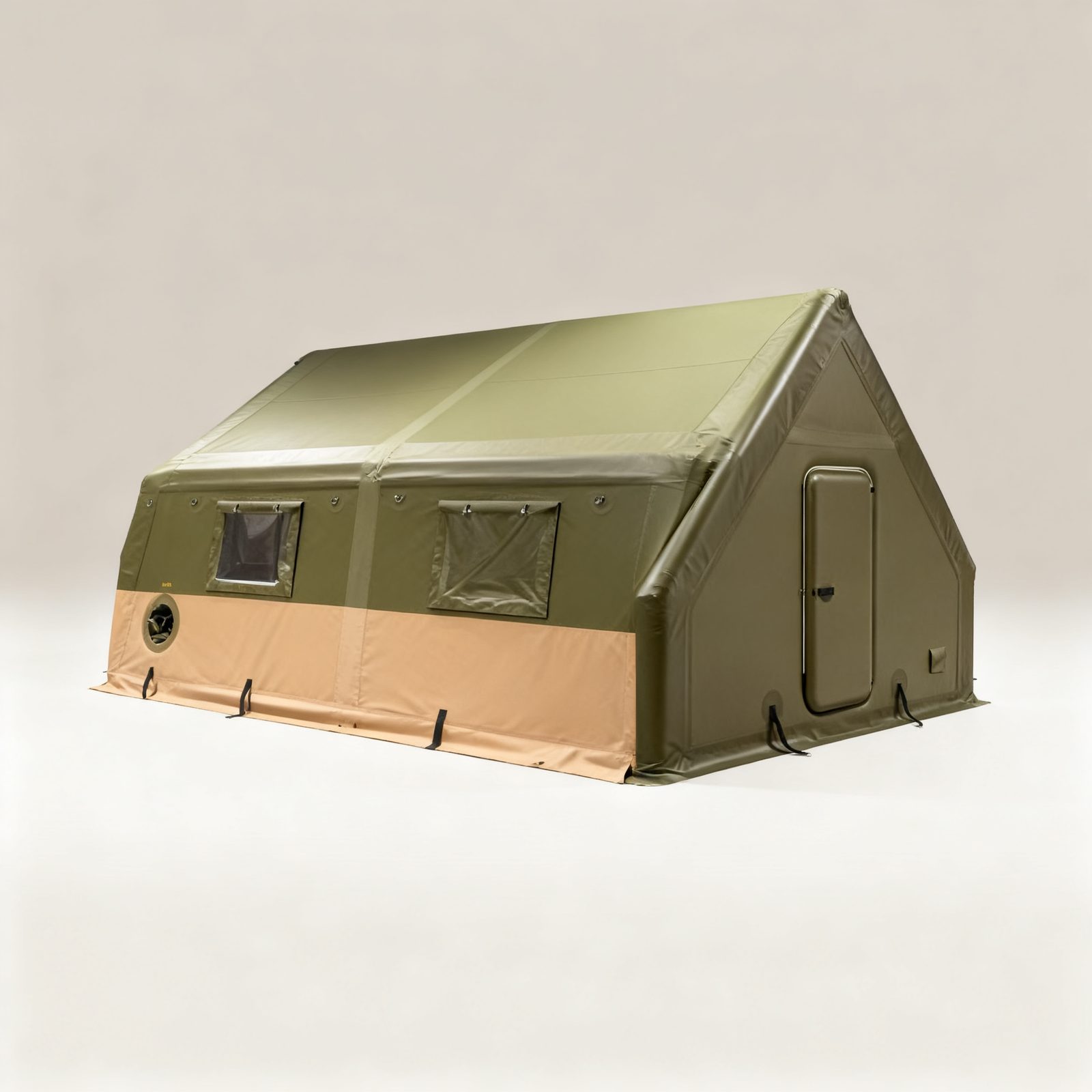
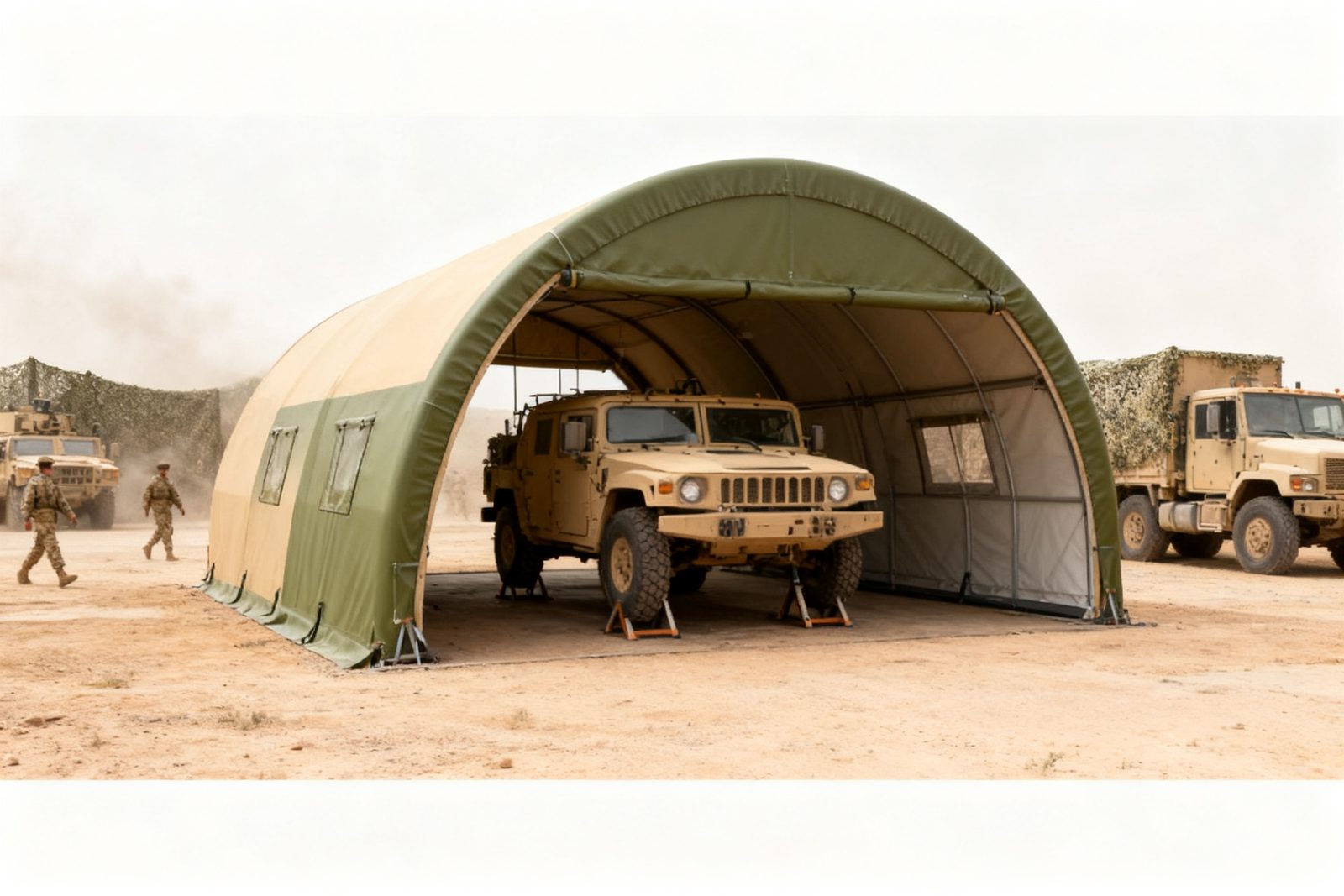
Un abri gonflable à extrémités ouvertes pour travailler sur des véhicules et du matériel sur le terrain.
Usages typiques
- Réparation de véhicules et de matériel en dehors d'un atelier
- Support d'exercices se déplaçant avec la force
- Maintenance d'équipements sur les chantiers de construction
- Opérations de récupération après dommages
Pourquoi une structure gonflable
- La zone de travail reste sèche et à l'abri du vent
- Se déplace avec l'unité qu'il soutient
- Les deux extrémités ouvertes permettent à un véhicule de passer à travers
Quand ce n'est pas le bon choix
Aucun objet ne peut être suspendu ou hissé à partir de la structure. Le levage nécessite un cadre indépendant qui transmet sa propre charge au sol — il s'agit d'une mesure de sécurité, pas d'une préférence.
La pression de fonctionnement, l'épaisseur de la membrane, la résistance à la traction et au déchirement, le poids, le volume emballé, les dimensions déployées, le classement au feu et la garantie sont en cours de vérification avec notre partenaire fabricant et des laboratoires indépendants. Nous publions les chiffres lorsqu'ils sont documentés, pas avant.
Access-constrained deployment → Envoyer les détails →
Page mise à jour 2026-10-13
Questions fréquentes
- Qu'est-ce qu'une tente drop-stitch ?
- Une tente drop-stitch a des parois qui sont elles-mêmes gonflées en panneaux rigides, plutôt qu'une enveloppe tendue sur des tubes gonflables. Des dizaines de milliers de fils internes maintiennent les deux faces du tissu parallèles, ce qui confère à la paroi une épaisseur et une rigidité réelles.
- Quel vent peut supporter une tente gonflable militaire ?
- Le classement au vent dépend de la pression de fonctionnement, de l'ancrage et du modèle spécifique, et il est sans signification sans un rapport d'essai à l'appui. Les nôtres sont en cours de vérification ; nous publions les chiffres lorsqu'ils sont documentés.
- Que se passe-t-il si une tente gonflable militaire est percée ?
- Dans une structure drop-stitch à chambres, la chambre affectée s'affaiblit et le reste de la structure reste debout, et la perforation est réparée sur le terrain. Dans une construction à poutres pneumatiques, le tube est le cadre, donc la perte d'un tube est un événement structurel.