Budynki i schronienia · Obrona
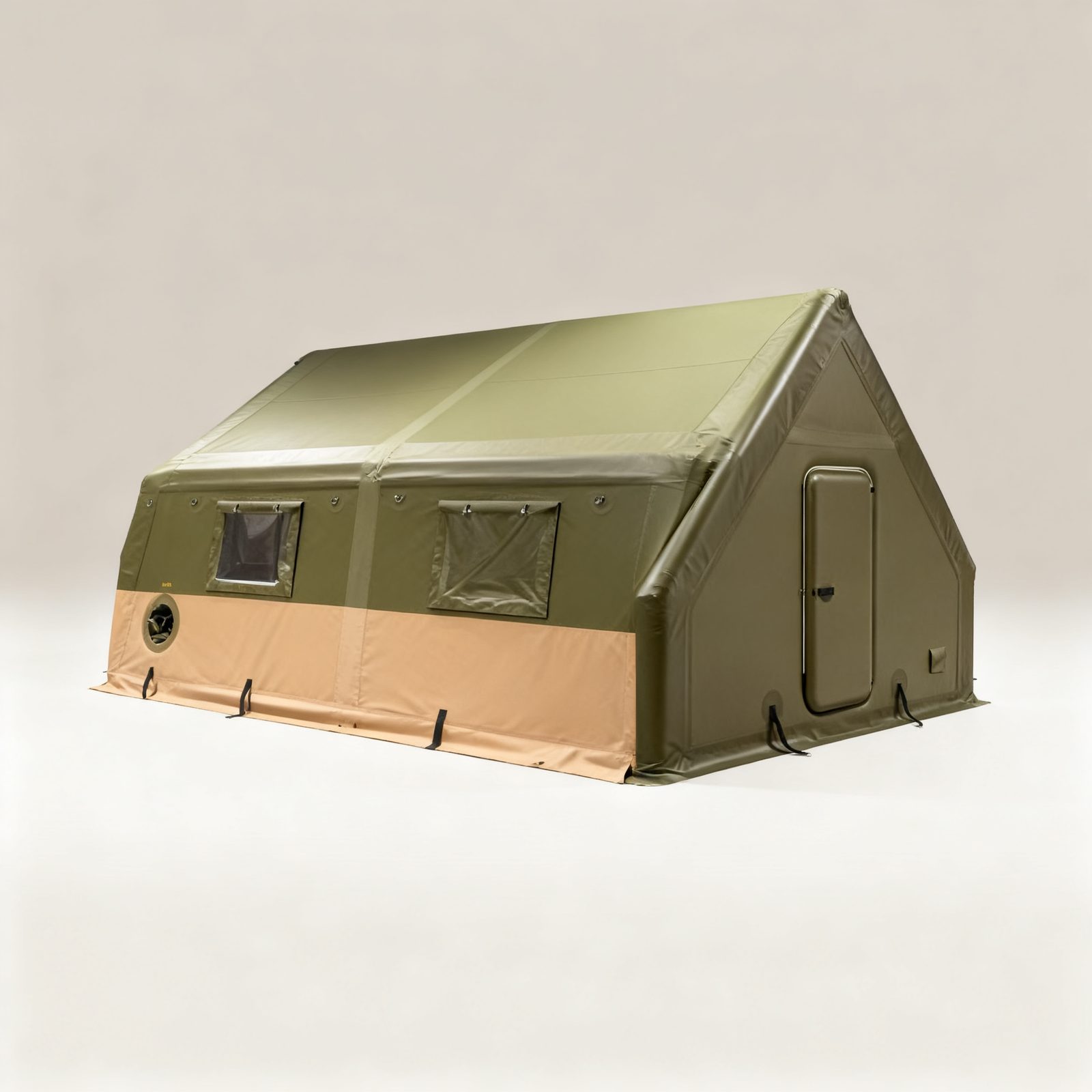
Schronienie pneumatyczne do obsługi technicznej
Schronienie serwisowe
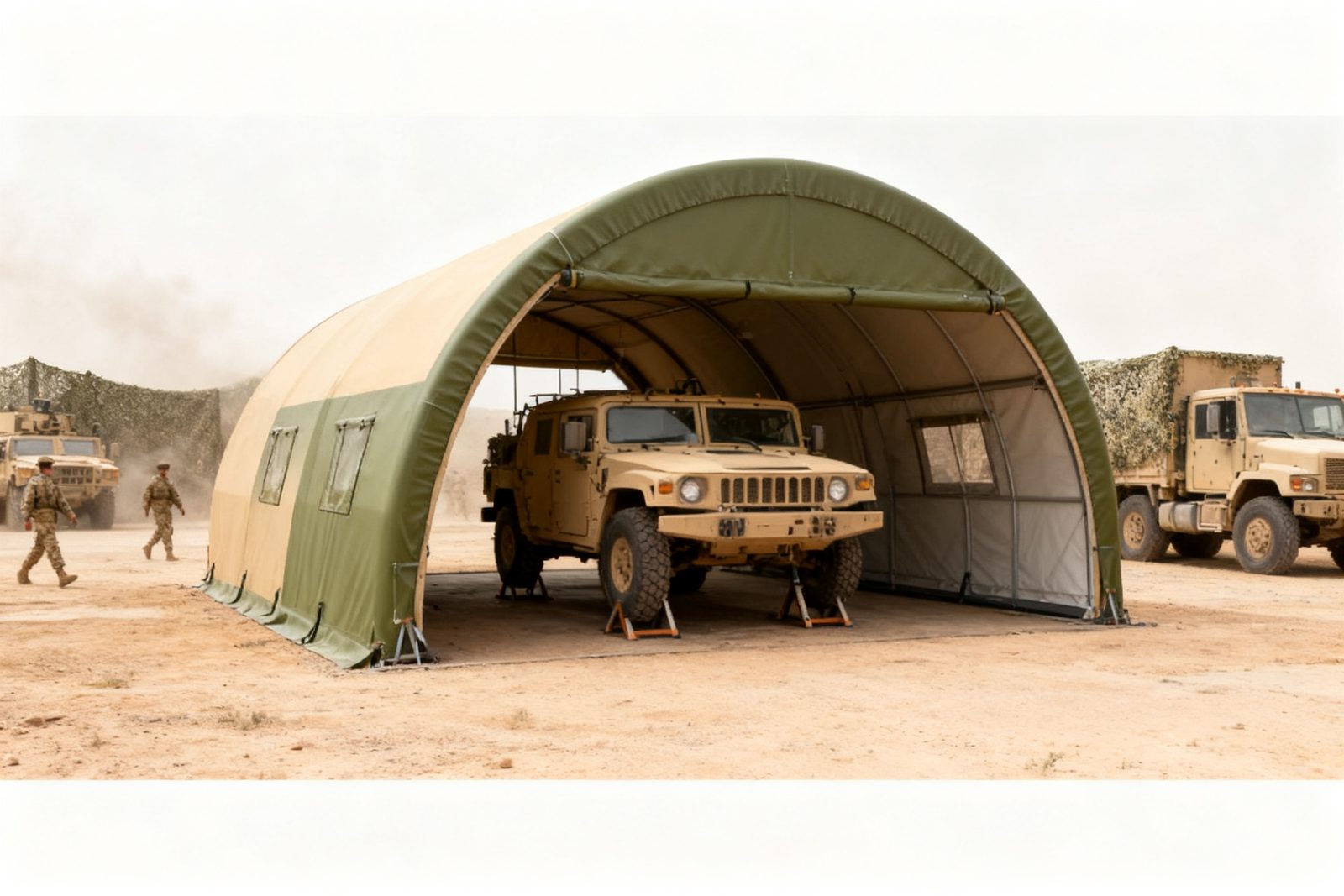
Otworzone schronienie pneumatyczne do pracy na pojazdach i sprzęcie w terenie.
Typowe zastosowania
- Naprawa pojazdów i sprzętu poza warsztatem
- Wsparcie ćwiczeń poruszających się z siłą
- Obsługa techniczna maszyn na budowach
- Operacje ratunkowe po uszkodzeniu
Dlaczego konstrukcja pneumatyczna
- Powierzchnia robocza pozostaje sucha i chroniona przed wiatrem
- Przenosi się wraz z jednostką, którą wspiera
- Obydwa końce otwarte, aby pojazd mógł przejechać przez nie
Kiedy to nie jest właściwy wybór
Nie wolno zawieszać ani podnosić ciała na strukturze. Podnoszenie wymaga niezależnego ramienia, które przenosi własną obciążenie na podłoże — jest to wymóg bezpieczeństwa, a nie preferencja.
Parametry w trakcie weryfikacji u producenta
Ciśnienie robocze, grubość membrany, wytrzymałość na rozciąganie i pękanie, waga, objętość w opakowaniu, wymiary po rozstawieniu, klasyfikacja ogniowa i gwarancja są weryfikowane przez naszego partnera produkcyjnego i niezależne laboratoria. Publikujemy dane, gdy zostaną udokumentowane, a nie wcześniej.
Access-constrained deployment → Wyślij szczegóły →
Strona zaktualizowana 2026-10-13
Częste pytania
- Co to jest namiot drop-stitch?
- Namiot drop-stitch ma ściany, które same są napowietrzane w sztywne panele, a nie skórę rozciągniętą na napowietrzonych rurach. Tysiące wewnętrznych wątków utrzymują dwie warstwy tkaniny równolegle, co nadaje ścianie rzeczywistą grubość i sztywność.
- Jakie wiatry wytrzymuje namiot wojskowy pneumatyczny?
- Klasyfikacja wiatrowa zależy od ciśnienia roboczego, mocowania i konkretnego modelu, i nie ma znaczenia bez załączonego raportu testowego. Nasze są weryfikowane; publikujemy liczby, gdy zostaną udokumentowane.
- Co się dzieje, jeśli namiot wojskowy pneumatyczny zostanie przebity?
- W komorowej strukturze drop-stitch dotkana komora mięknie, a reszta struktury pozostaje w pozycji, a przebitą łatwo naprawić w terenie. W konstrukcji z rurami pneumatycznymi rura jest ramą, więc utrata jednej z nich jest zdarzeniem strukturalnym.