Edifícios e Abrigos · Ambiente Extremo
Alojamento em Campo de Mineração
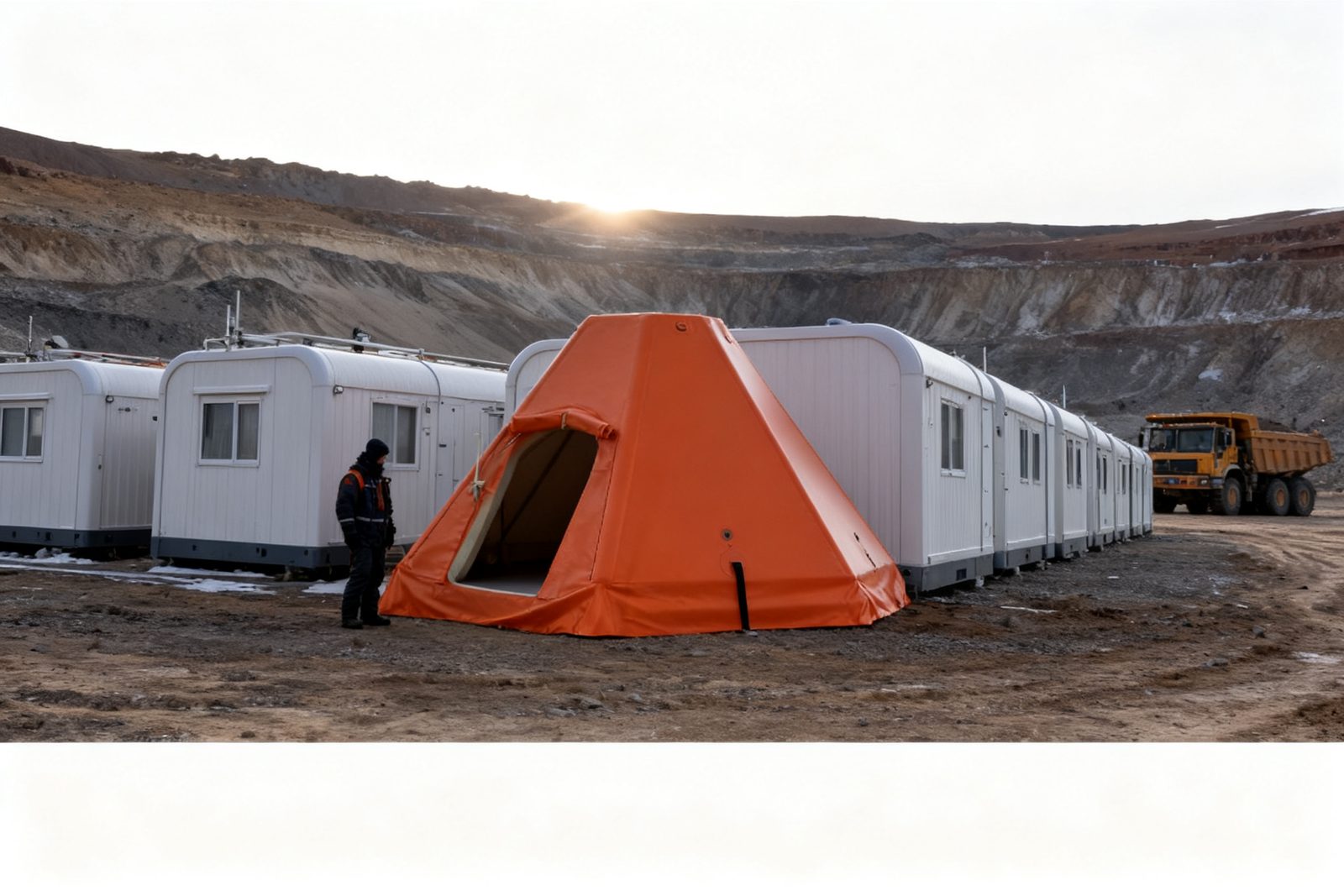
Alojamento para acampamento mineiro
Alojamento inflável para equipas de trabalho em sítios mineiros.

Usos típicos
- Alojamento de trabalhadores de minas a céu aberto e subterrâneas
- Campos de exploração antes do compromisso
- Alojamento de transição durante a expansão
- Sítios remotos em rotação
Porquê uma estrutura insuflável
- O transporte e a montagem dominam o custo em sítios remotos
- É removido com a licença quando o recurso é esgotado
- Aumenta em unidades à medida que a equipa de trabalho cresce
Quando esta não é a escolha certa
As distâncias de exclusão de detonação são definidas pelo operador da mina. A vida sob poeira contínua e vibração do solo requer avaliação para o sítio específico, em vez de uma resposta geral.
Especificações em verificação junto do fabricante
A pressão de trabalho, espessura da membrana, resistência à tração e ao rasgo, peso, volume embalado, dimensões implantadas, classificação de incêndio e garantia estão a ser verificados com o nosso parceiro fabricante e laboratórios independentes. Publicamos os valores quando forem documentados, não antes.
Access-constrained deployment → Enviar os detalhes →
Página atualizada 2026-10-13
Perguntas frequentes
- Os abrigos infláveis funcionam em frio extremo?
- O comportamento do revestimento muda em baixa temperatura — o PVC endurece, o TPU permanece flexível. Não aceitamos projetos polares ou árticos sem dados de teste em baixa temperatura sobre o tecido específico, porque uma parede que racha a menos quarenta graus não é um abrigo.
- Os abrigos podem ser entregues onde não há estrada?
- Esta é a principal razão pela qual existem. O volume embalado decide quantas unidades cabem num avião ou num barco, e a montagem não requer guindaste ou equipa treinada.
- Como são ancorados em areia, rocha ou solo congelado?
- A ancoragem é específica do sítio e é a parte mais frequentemente subestimada. Areia, permafrost e rocha cada uma precisam de um tipo diferente de âncora, e o plano de ancoragem deve ser acordado antes de a estrutura ser especificada.