Budynki i Schronienia · Schronienie Awaryjne
Jednostka Schronienia dla Uchodźców
Schronienie dla uchodźców
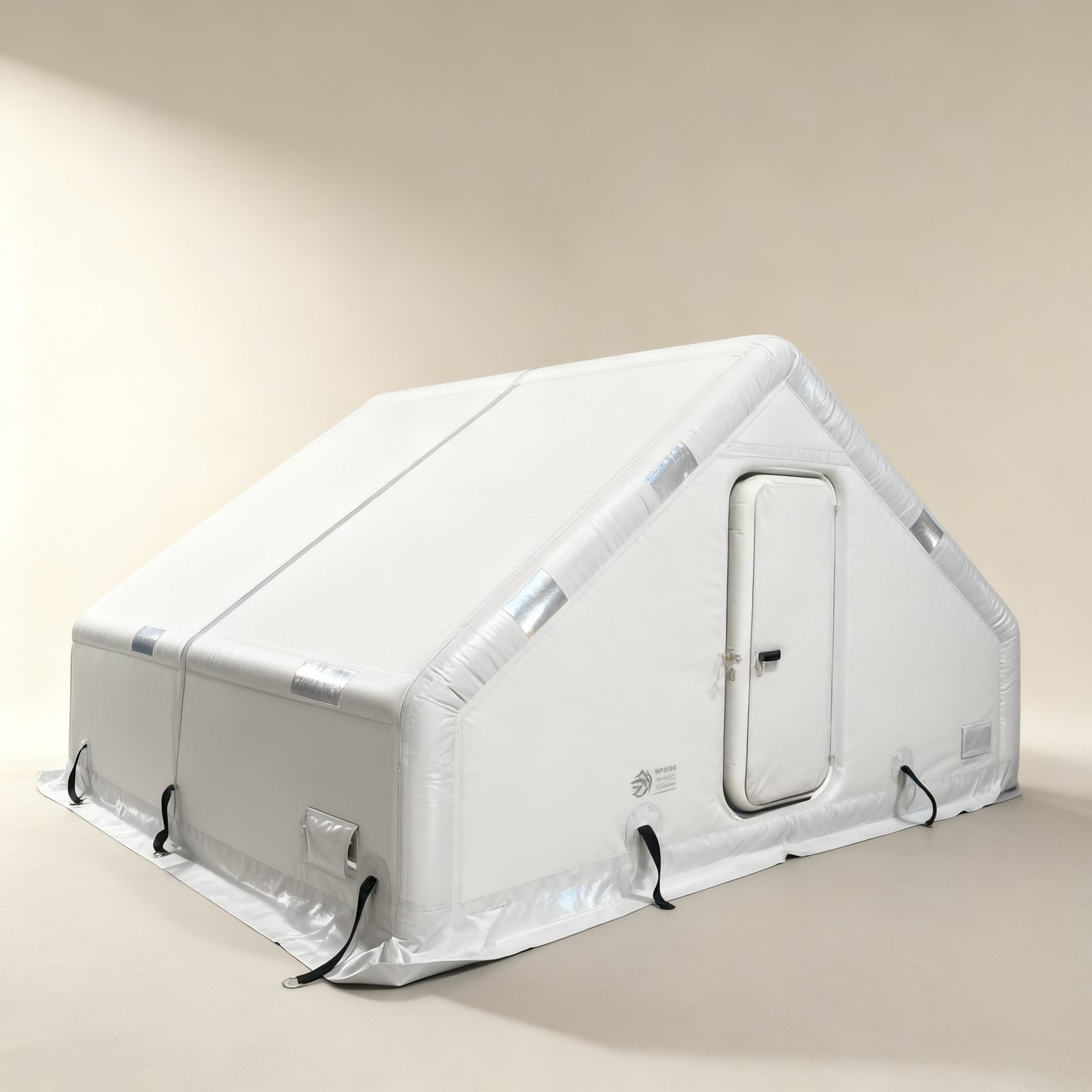
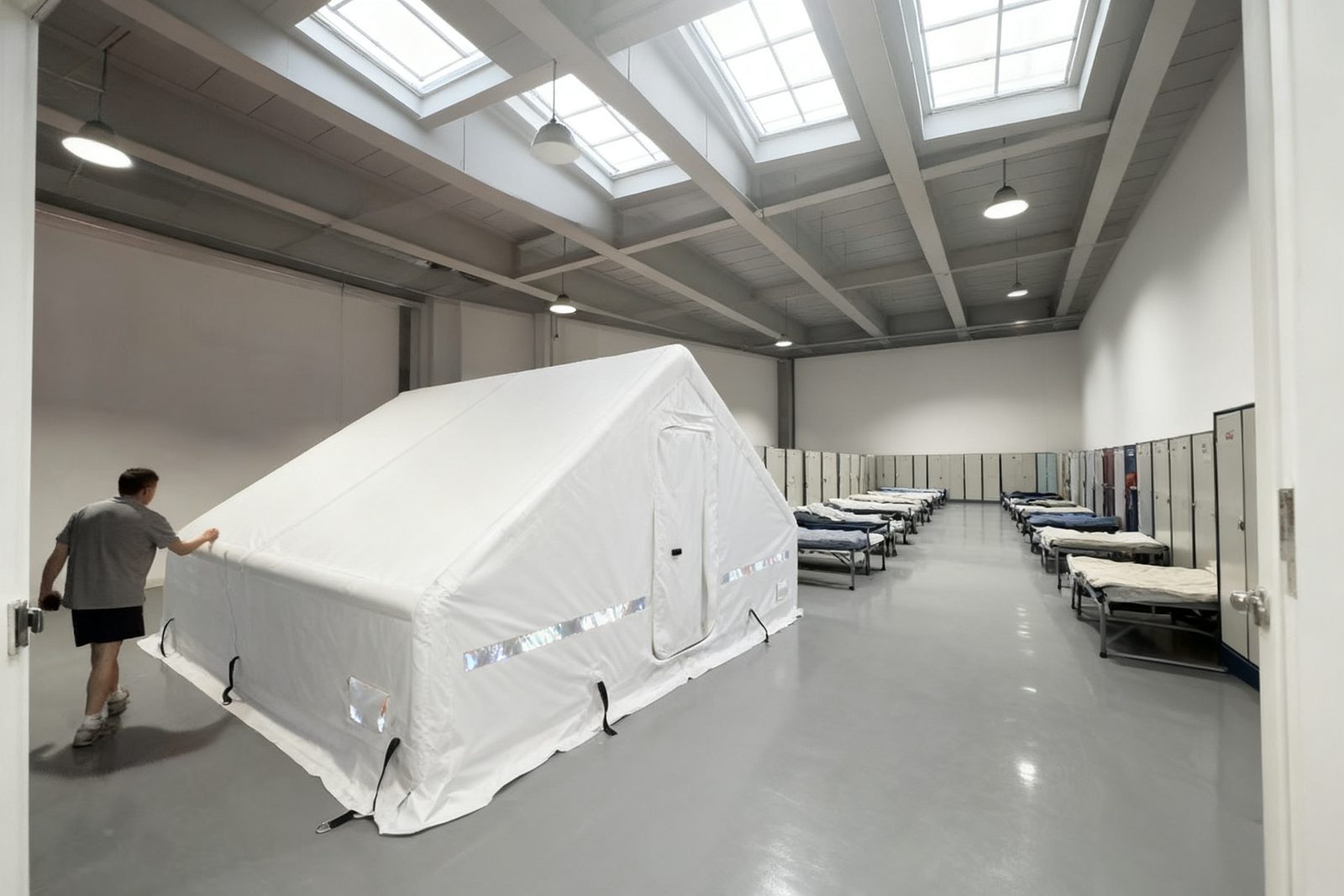
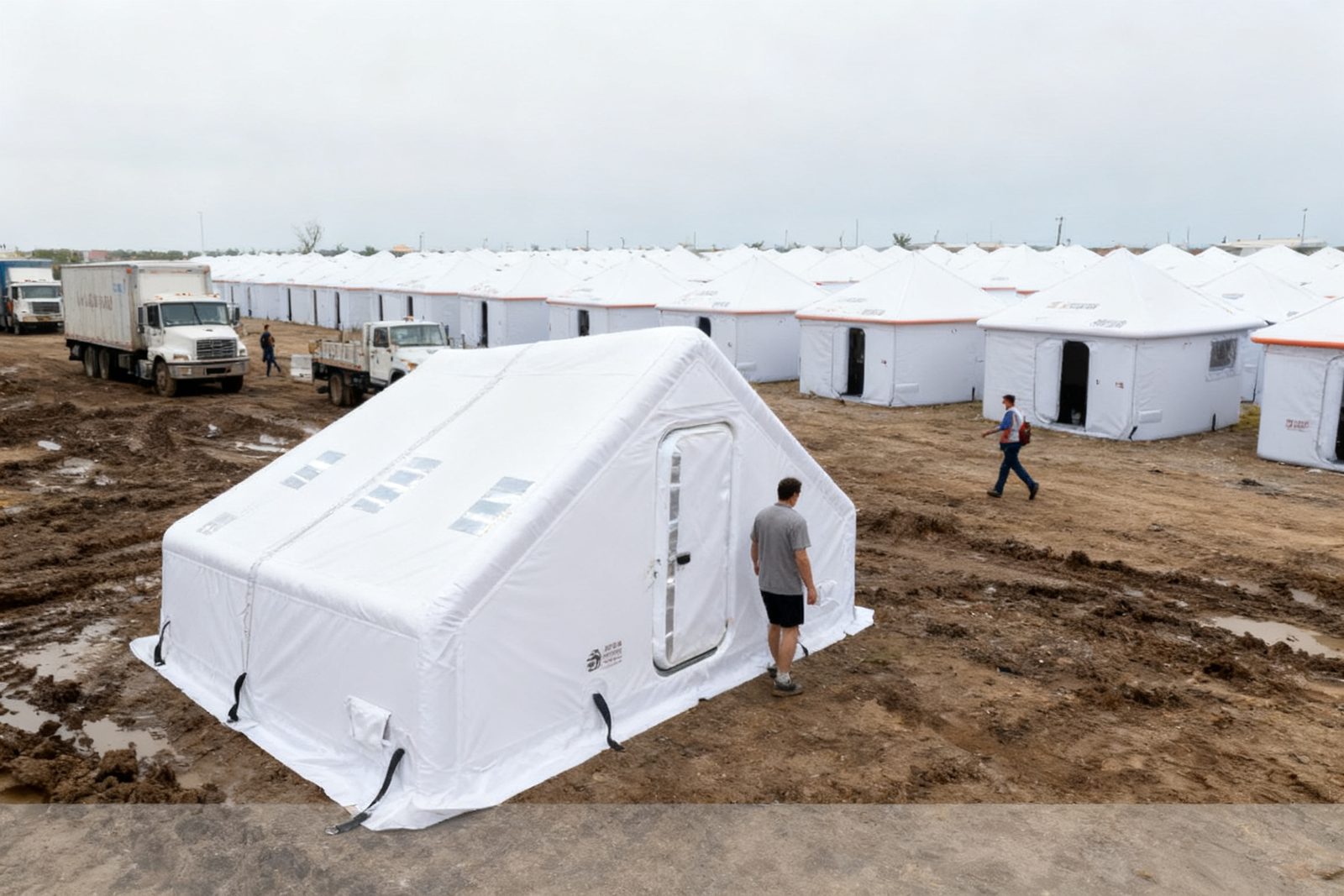
Jednostki schronienia do programów humanitarnych, dostarczane w spójnej specyfikacji na skalę.
Typowe zastosowania
- Przemorskie obozy uchodźcze
- Programy agencji ONZ i międzynarodowych NGO
- Jednostki rodzinne w obozach długoterminowych
- Programy wymagające standaryzowanej specyfikacji
Dlaczego konstrukcja pneumatyczna
- Spójna specyfikacja upraszcza zakupy i zarządzanie obozem
- Odzyskuwalne po zamknięciu obozu, zgodnie z polityką ponownego użycia humanitarnego
Kiedy to nie jest właściwy wybór
Certyfikaty i raporty testowe blokują te programy zanim produkt. Bez dokumentacji równoważnej UNHCR dostawca w ogóle nie dostaje się na listę — jest to warunek wstępny, a nie różnicator, i to jest praca, którą teraz wykonujemy.
Parametry w trakcie weryfikacji u producenta
Ciśnienie robocze, grubość membrany, wytrzymałość na rozciąganie i pękanie, waga, objętość w opakowaniu, wymiary po rozwinięciu, klasyfikacja ogniowa i gwarancja są weryfikowane przez naszego partnera produkcyjnego i niezależne laboratoria. Publikujemy dane, gdy są udokumentowane, a nie wcześniej.
Rapid deployable space → Wyślij szczegóły →
Strona zaktualizowana 2026-10-13
Częste pytania
- Jak szybko można wdrożyć schronienie awaryjne?
- Mała jednostka jest napompowywana przez jedną lub dwie osoby w ciągu minut; camp jest ograniczony przez pojemność źródła powietrza i przygotowanie terenu, a nie przez schronienia. Publikujemy czasy dla poszczególnych modeli po ich zmierzeniu, a nie wcześniej.
- Co to jest schronienie przejściowe?
- Schronienie przejściowe to etap między namiotem awaryjnym a domem trwałym — wystarczająca przestrzeń, prywatność i ochrona przed warunkami atmosferycznymi, aby mieszkać w nim przez miesiące podczas rekonstrukcji. Nie jest przeznaczone do trwałego zamieszkania.
- Czy schronienia można ponownie użyć po wdrożeniu?
- Tak. Jednostki są czyszczone, suszone, naprawiane jeśli to konieczne i ponownie pakowane, dlatego kupujący humanitarni preferują je ponad zużywalnymi namiotami. Cykle ponownego użycia zależą bardziej od dyscypliny obsługi niż od produktu.