Bâtiments et abris · Abri d'urgence
Refuge d'urgence
Abri d'urgence
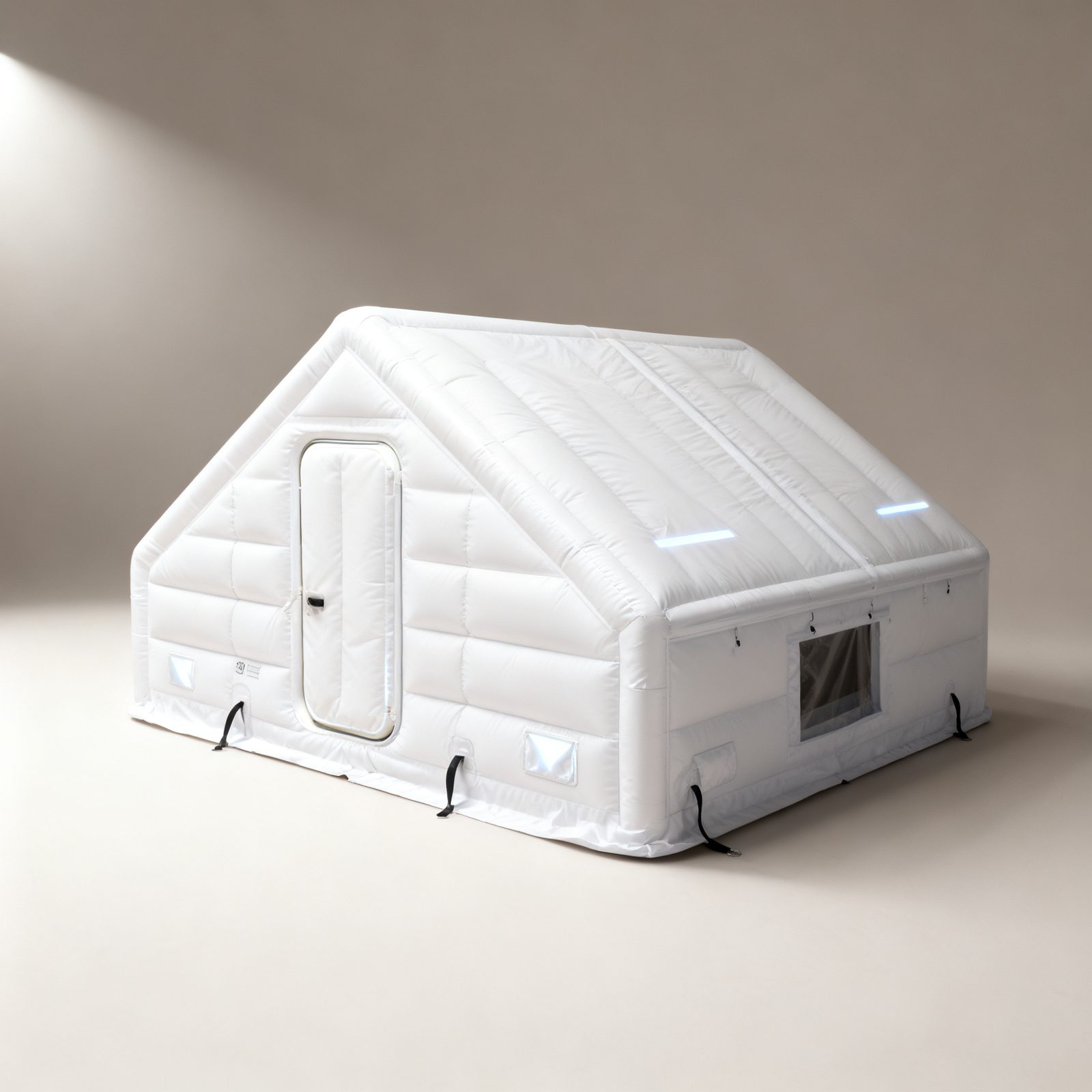
Un espace d'abri public destiné à être utilisé en cas de catastrophe.
Usages typiques
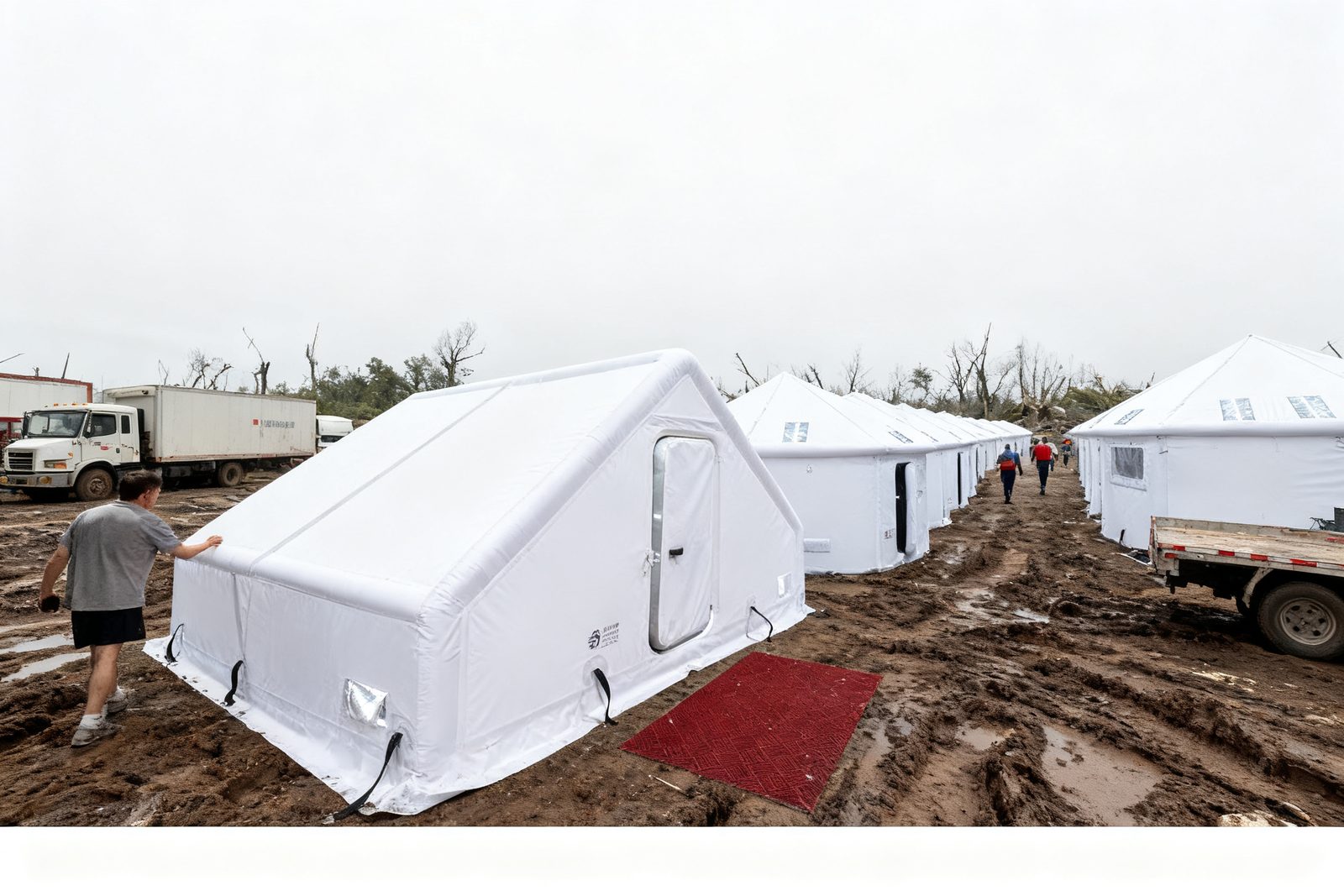
- Points de refuge communautaires pendant les typhons et les fortes pluies
- Abri collectif temporaire après un tremblement de terre
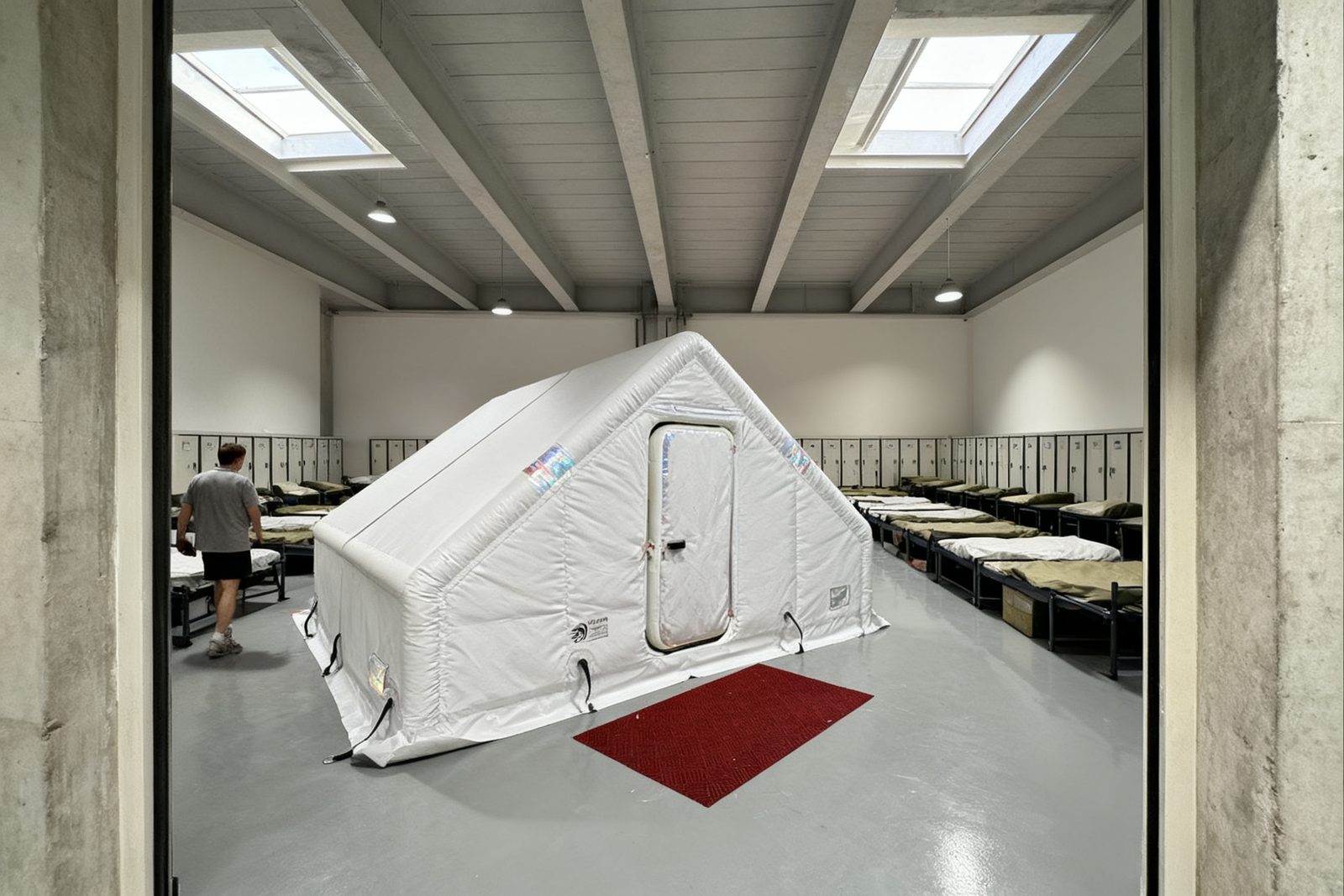
- Dispositif de plan d'urgence dans les établissements publics
- Installations pratiques pour les exercices d'évacuation
Pourquoi une structure gonflable
- Empreinte de stockage réduite, permettant un stockage indéterminé dans un entrepôt d'urgence
- Le déploiement ne nécessite pas d'équipe spécialisée
Quand ce n'est pas le bon choix
Il s'agit uniquement d'un espace d'abri. La protection contre l'incendie, les soins médicaux et les communications doivent être fournis par l'opérateur selon son propre plan d'urgence.
Caractéristiques en cours de vérification auprès du fabricant
La pression de fonctionnement, l'épaisseur de la membrane, la résistance à la traction et au déchirement, le poids, le volume emballé, les dimensions déployées, le classement au feu et la garantie sont en cours de vérification avec notre partenaire de fabrication et des laboratoires indépendants. Nous publions les chiffres une fois qu'ils sont documentés, pas avant.
Rapid deployable space → Envoyer les détails →
Page mise à jour 2026-10-13
Questions fréquentes
- À quelle vitesse un abri d'urgence peut-il être déployé ?
- Une petite unité est gonflée par une ou deux personnes en quelques minutes ; un camp est limité par la capacité de la source d'air et la préparation du site plutôt que par les abris. Nous publions les temps par modèle une fois qu'ils sont mesurés, pas avant.
- Qu'est-ce qu'un abri de transition ?
- Un abri de transition est l'étape entre une tente d'urgence et un logement permanent — suffisamment d'espace, d'intimité et de protection contre les intempéries pour y vivre pendant des mois pendant la reconstruction. Il n'est pas destiné à un occupancy permanent.
- Les abris peuvent-ils être réutilisés après un déploiement ?
- Oui. Les unités sont nettoyées, séchées, réparées si nécessaire et réemballées, c'est pourquoi les acheteurs humanitaires les préfèrent aux tentes consommables. Les cycles de réutilisation dépendent plus de la discipline de manipulation que du produit.