Budynki i schronienia · Obrona
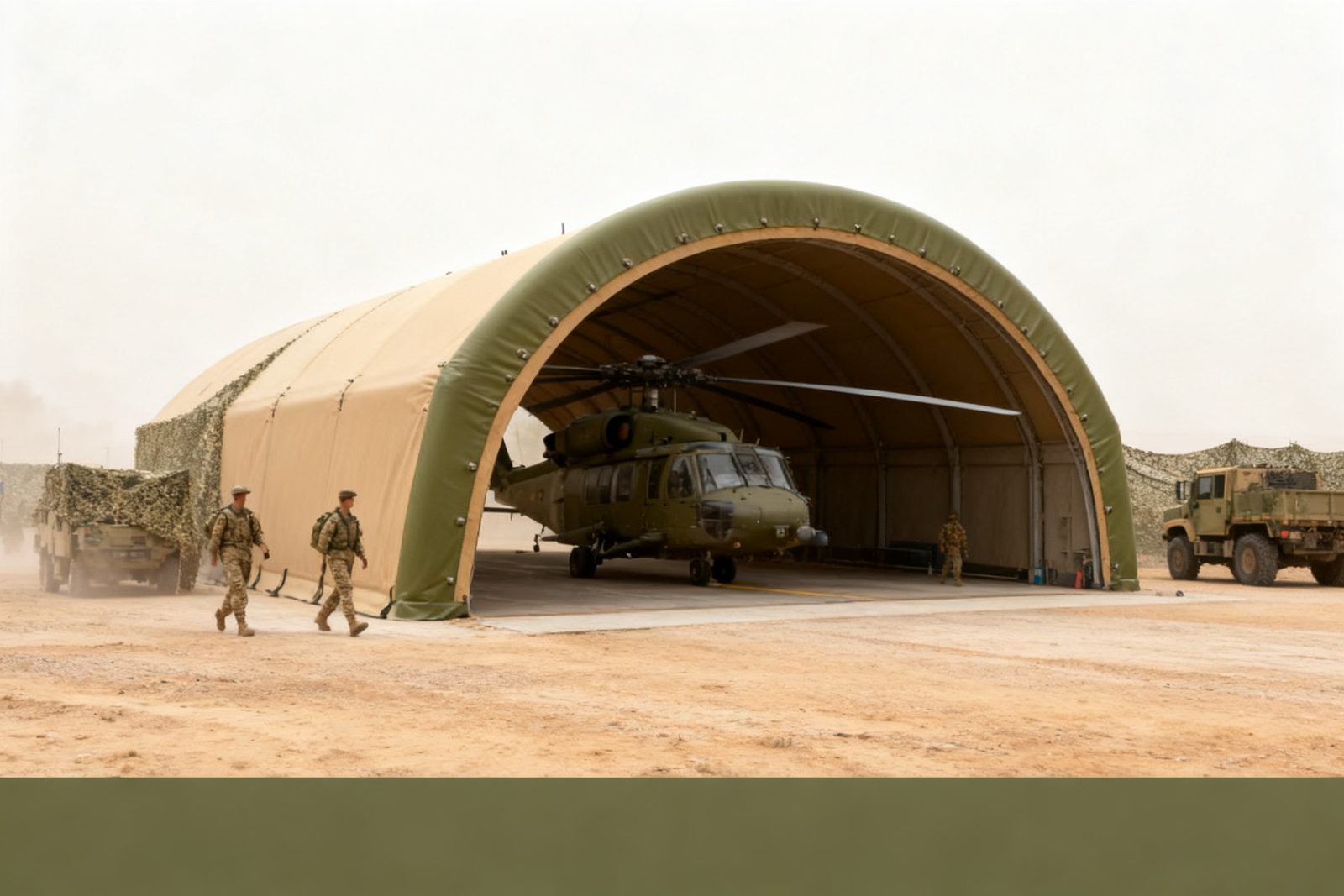
Hangar pneumatyczny dla helikopterów
Hangar dla helikopterów
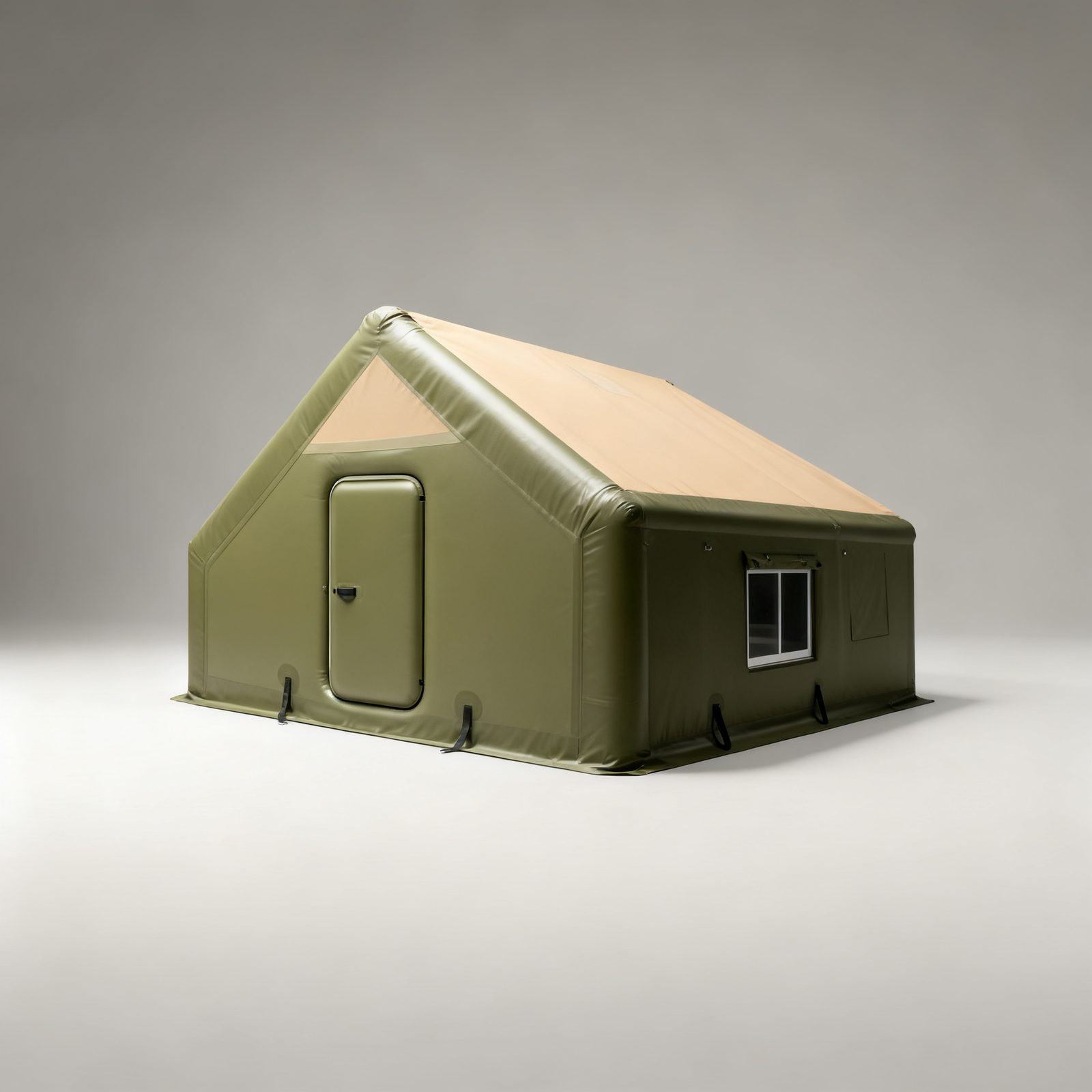
Szeroki, niski hangar pneumatyczny o rozmiarach dostosowanych do samolotów śmigłowych.
Typowe zastosowania
- Bazy ambulansów powietrznych przechowujących samoloty między wywołaniami
- Jednostki lotnicze policji i straży pożarnej na tymczasowych placówkach
- Operacje wspierające na morzu i w odległych regionach
- Ochrona podczas konserwacji w trakcie detachementów
Dlaczego konstrukcja pneumatyczna
- Bardzo szerokie otwarcie bez strukturalnego nagłówka na przekroju
- Montaż na istniejącym podłożu bez robót ziemnych
- Demontaż po zakończeniu detachementu
Kiedy to nie jest właściwy wybór
Wiatr od wirnika działający na strukturę membranową musi być testowany, a nie przyjmowany za pewnik. Nie wyceniimy hangaru do operacji z działającym wirnikiem bez tych pomiarów.
Parametry w trakcie weryfikacji u producenta
Ciśnienie robocze, grubość membrany, wytrzymałość na rozciąganie i pękanie, waga, objętość w opakowaniu, wymiary po rozstawieniu, klasyfikacja ogniowa i gwarancja są weryfikowane przez naszego partnera produkcyjnego i niezależne laboratoria. Publikujemy dane, gdy są udokumentowane, a nie wcześniej.
Access-constrained deployment → Wyślij szczegóły →
Strona zaktualizowana 2026-10-14
Częste pytania
- Co to jest namiot drop-stitch?
- Namiot drop-stitch ma ściany, które same są napowietrzane w sztywne panele, a nie skórę rozciągniętą na napowietrzonych rurach. Tysiące wewnętrznych wątków utrzymują dwie warstwy tkaniny równolegle, co nadaje ścianie rzeczywistą grubość i sztywność.
- Jaką prędkość wiatru wytrzymuje namiot wojskowy pneumatyczny?
- Klasyfikacja wiatrowa zależy od ciśnienia roboczego, mocowania i konkretnego modelu, i jest bezsensowna bez załączonego raportu testowego. Nasze są weryfikowane; publikujemy liczby, gdy są udokumentowane.
- Co się dzieje, jeśli namiot wojskowy pneumatyczny zostanie przebity?
- W komorowej strukturze drop-stitch, dotkana komora mięknie, a reszta struktury pozostaje w pozycji, a przebitą łatwo naprawić w polu. W konstrukcji z rurami pneumatycznymi (air-beam), rura jest ramą, więc utrata jednej z nich jest zdarzeniem strukturalnym.