Edificios y Refugios · Refugio de Emergencia
Refugio de Tránsito
Refugio de tránsito
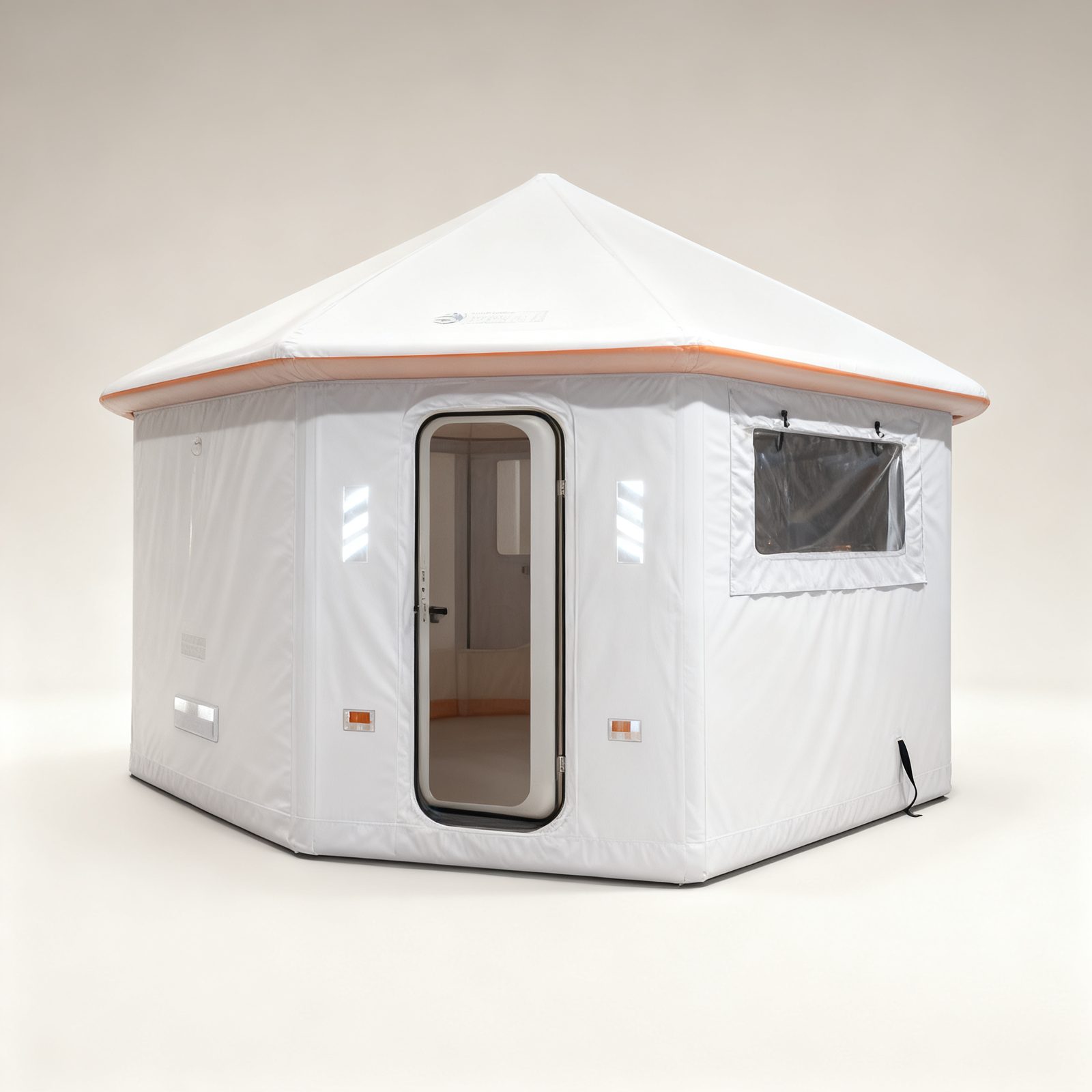
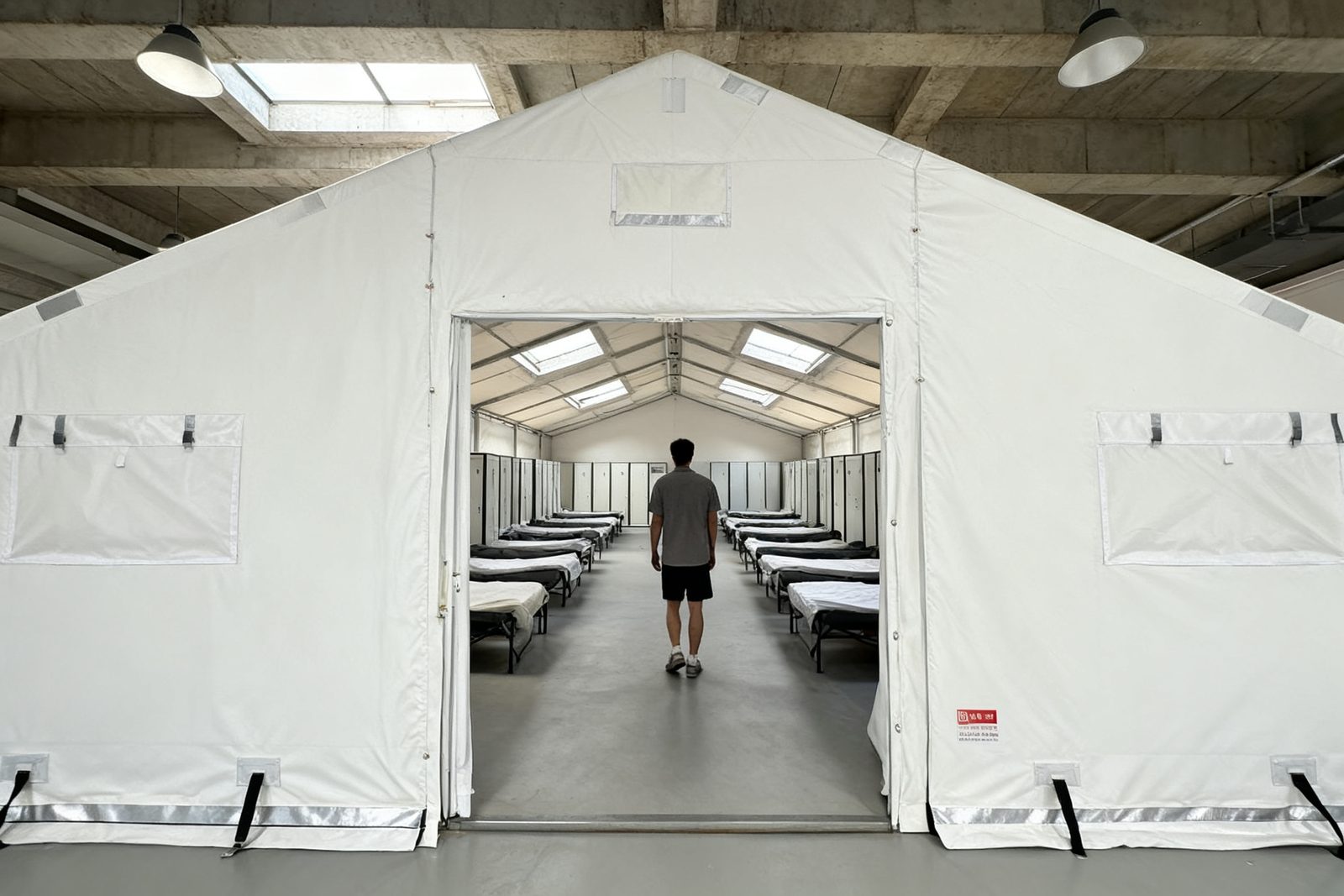
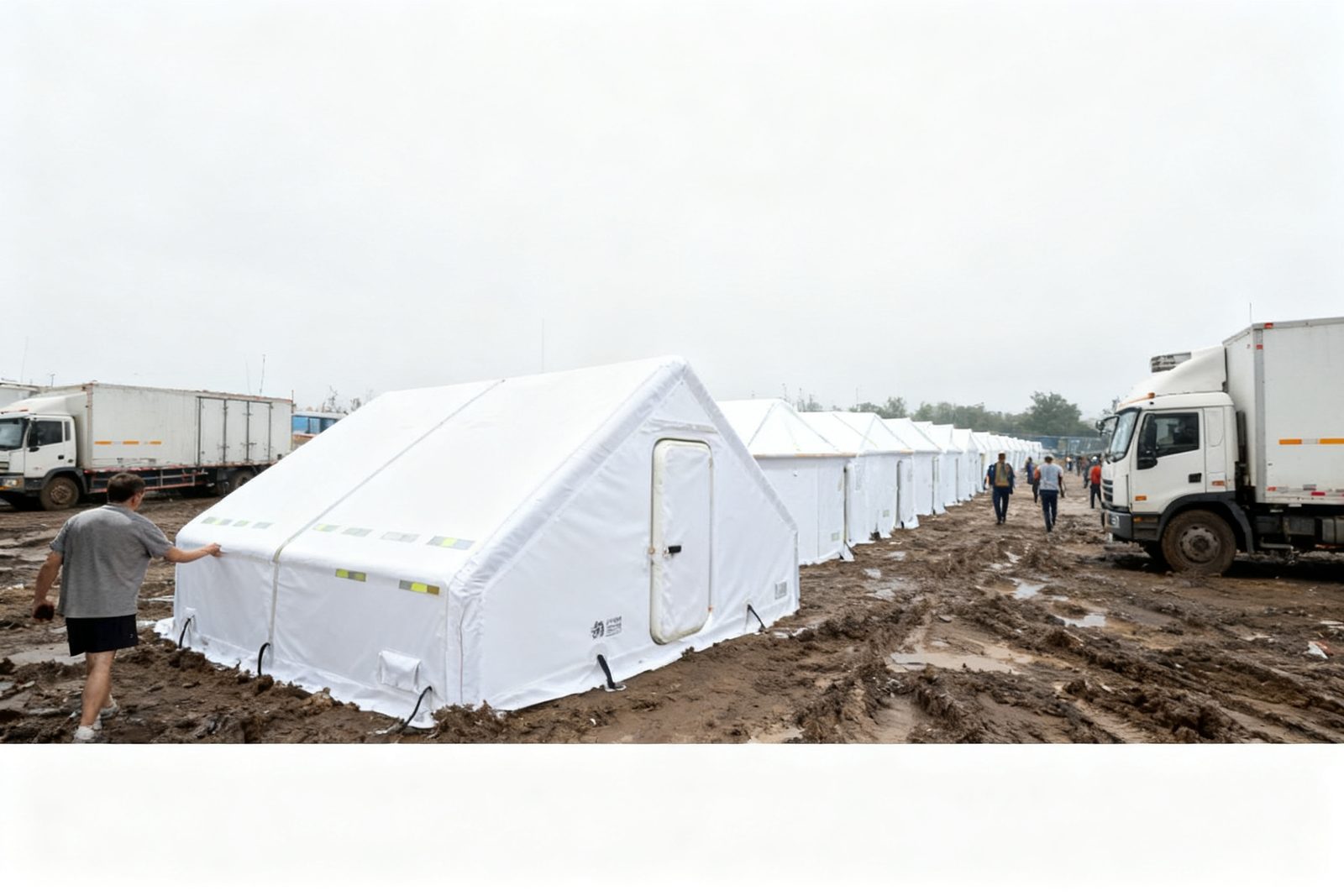
Una unidad temporal de reagrupación y descanso a lo largo de una ruta de evacuación.
Usos típicos
- Puntos de descanso en rutas de evacuación
- Puntos de registro y dispersión
- Cobertura en puntos de distribución de suministros
- Etapa nocturna durante el movimiento
Por qué una estructura inflable
- Rápido de montar y desmontar, adaptándose a la movilidad de un punto de tránsito
- Avanza hacia delante a medida que la ruta progresa
Cuándo no es la opción adecuada
Alojamiento nocturno. Los puntos de tránsito están diseñados para paradas medidas en horas y no incluyen ninguno de los equipamientos de alojamiento.
Especificaciones pendientes de verificación con el fabricante
La presión de trabajo, el grosor de la membrana, la resistencia a la tracción y al desgarro, el peso, el volumen empaquetado, las dimensiones desplegadas, la clasificación contra incendios y la garantía están siendo verificados con nuestro socio fabricante y laboratorios independientes. Publicamos los datos cuando están documentados, no antes.
Rapid deployable space → Enviar los detalles →
Página actualizada 2026-10-13
Preguntas frecuentes
- ¿Qué tan rápido se puede desplegar un refugio de emergencia?
- Una unidad pequeña es inflada por una o dos personas en minutos; un campamento está limitado por la capacidad de la fuente de aire y la preparación del sitio más que por los refugios. Publicamos los tiempos por modelo una vez que son medidos, no antes.
- ¿Qué es un refugio transitorio?
- Un refugio transitorio es la etapa entre una carpa de emergencia y una vivienda permanente: suficiente espacio, privacidad y protección contra el clima para vivir en él durante meses mientras se realiza la reconstrucción. No está destinado a ocupación permanente.
- ¿Se pueden reutilizar los refugios después de un despliegue?
- Sí. Las unidades son limpiadas, secadas, reparadas si es necesario y repaquetadas, por lo que los compradores humanitarios los prefieren sobre las carpas consumibles. Los ciclos de reutilización dependen más de la disciplina de manejo que del producto.