Budynki i Schronienia · Zakwaterowanie i Usługi Gospodarcze
Veranda Pod
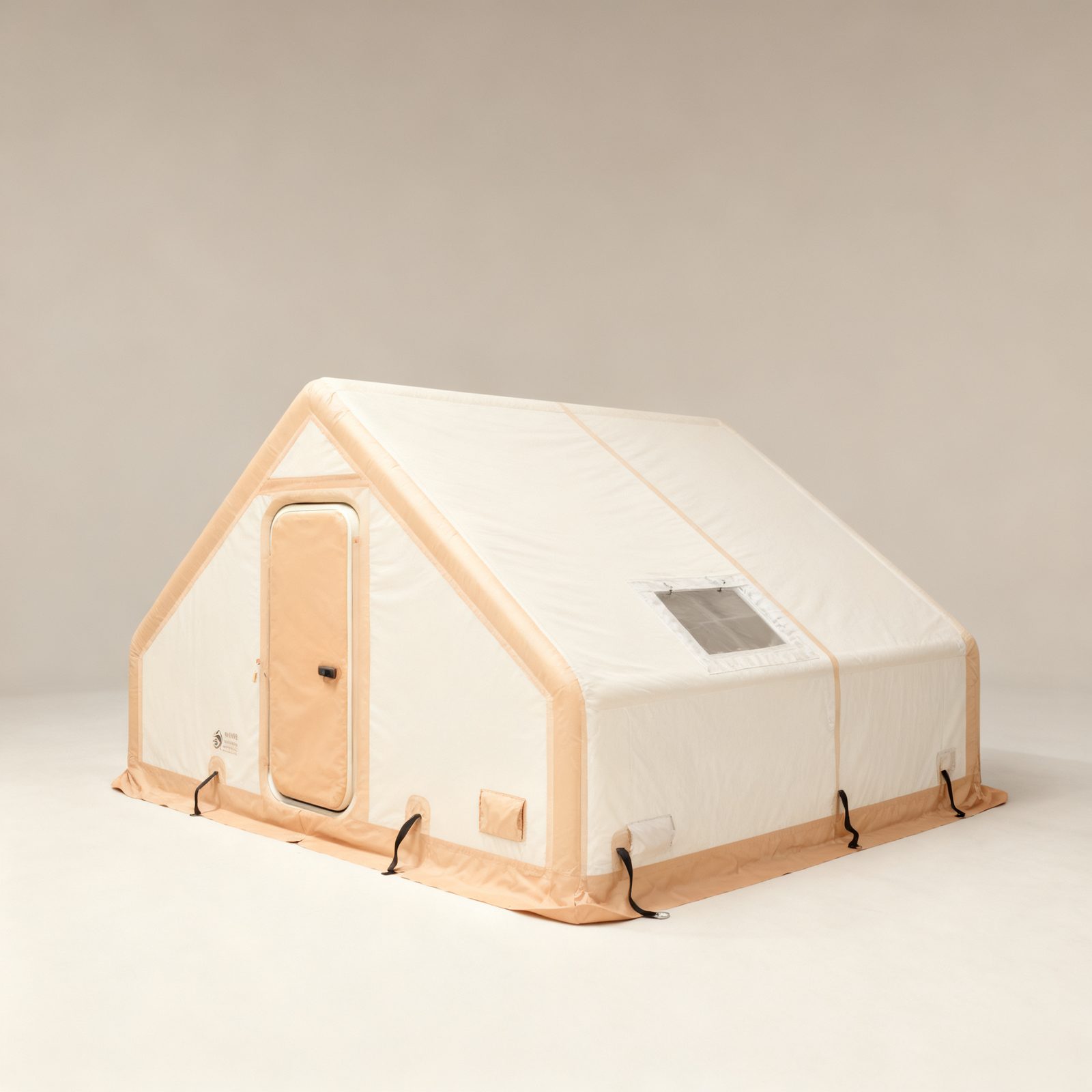
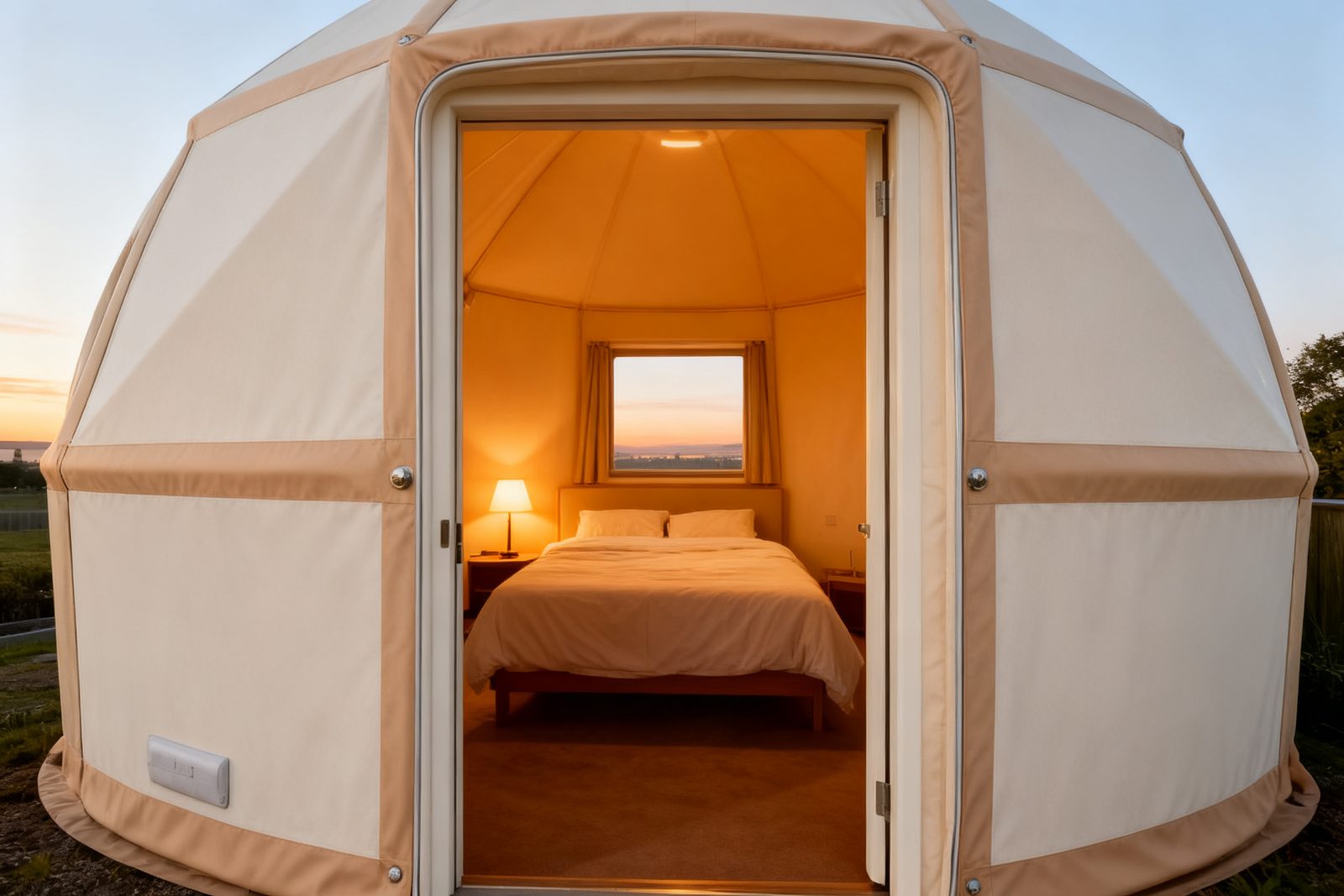
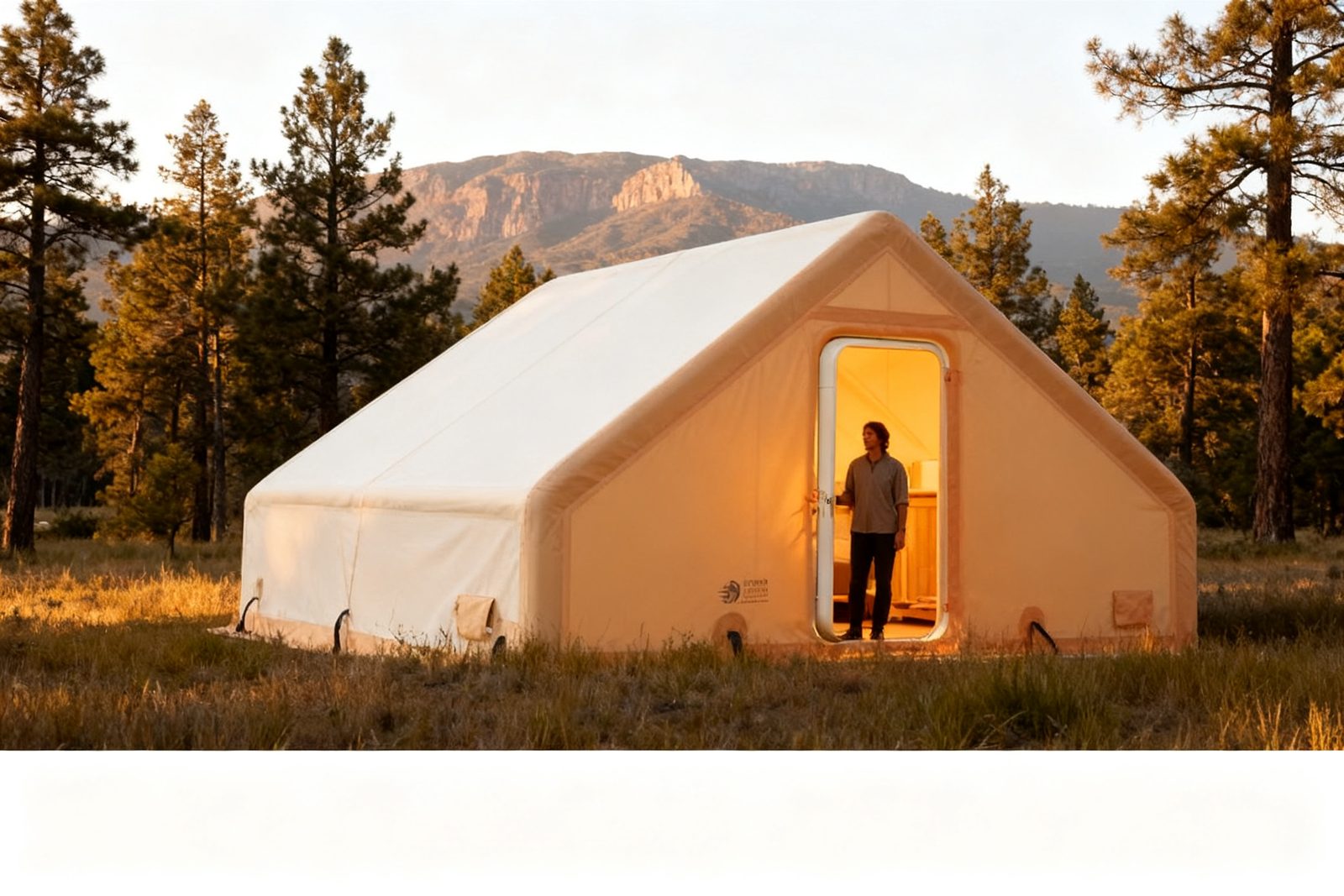
Kapsuła z werandą
Jednostka zakwaterowawcza z zintegrowaną, przykrywaną werandą tworzącą użyteczny pomieszczenie zewnętrzne.
Typowe zastosowania
- Miejsca tropikalne i subtropikalne, gdzie goście chcą cienia, ale nie zamknięcia
- Miejsca nad wodą, gdzie weranda skierowana jest w stronę widoku
- Goście rodzinne, gdzie dorośli nadzorują z werandy
- Układy, które oddzielają przestrzeń snu od przestrzeni livingowej
Dlaczego konstrukcja pneumatyczna
- Weranda jest tworzona wraz z jednostką, a nie budowana osobno
- Dodaje sprzedawaną powierzchnię bez zwiększania obciążenia chłodniczego
- Przestrzeń zewnętrzna pozostaje użyteczna przez sezon deszczowy
Kiedy to nie jest właściwy wybór
Miejsca z wysokimi wiatrami. Weranda znacznie zwiększa powierzchnię projekcyjną skierowaną w stronę wiatru i wymaga oceny wraz z projektem kotwiczenia. Nie polecamy jej na eksponowanym miejscu bez takiej oceny.
Parametry w trakcie weryfikacji u producenta
Ciśnienie robocze, grubość membrany, wytrzymałość na rozciąganie i pękanie, waga, objętość w opakowaniu, wymiary po rozstawieniu, klasyfikacja ogniowa oraz gwarancja są weryfikowane przez naszego partnera produkcyjnego i niezależne laboratoria. Publikujemy dane, gdy są udokumentowane, a nie wcześniej.
Livable units → Wyślij szczegóły →
Strona zaktualizowana 2026-10-13
Częste pytania
- Ile kosztuje kapsuła glampingowa?
- Porównywalne jednostki na rynku międzynarodowym znajdują się w szerokim przedziale od piętnaści do trzydziestu tysięcy dolarów amerykańskich z wyposażeniem. Cena jest determinowana głównie przez specyfikację wnętrza — łazienka, system klimatyzacji i meble — a nie przez samego obudowania. Obecnie nie podajemy cen; ta figura jest kontekstem rynkowym, a nie naszą ceną.
- Jak długo trwają pneumatyczne jednostki zakwaterowawcze?
- Service life depends on UV exposure, how often the unit is packed and unpacked, and storage discipline between seasons. We do not publish a figure because we do not yet hold the accelerated-ageing data to support one. Anyone quoting a decade without test data is guessing.
- Czy wymagają one fundamentów lub zgody planistycznej?
- Nie wymaga się fundamentów — jednostka jest kotwiczona, a nie budowana. Traktowanie planistyczne różni się w zależności od jurysdykcji i jest odpowiedzialnością operatora, aby to potwierdzić; w wielu miejscach demontowalna jednostka jest traktowana inaczej niż trwały budynek, co jest głównym powodem, dla którego operatorzy campingu je wybierają.